1Overview & Introduction: Why This Moment Matters
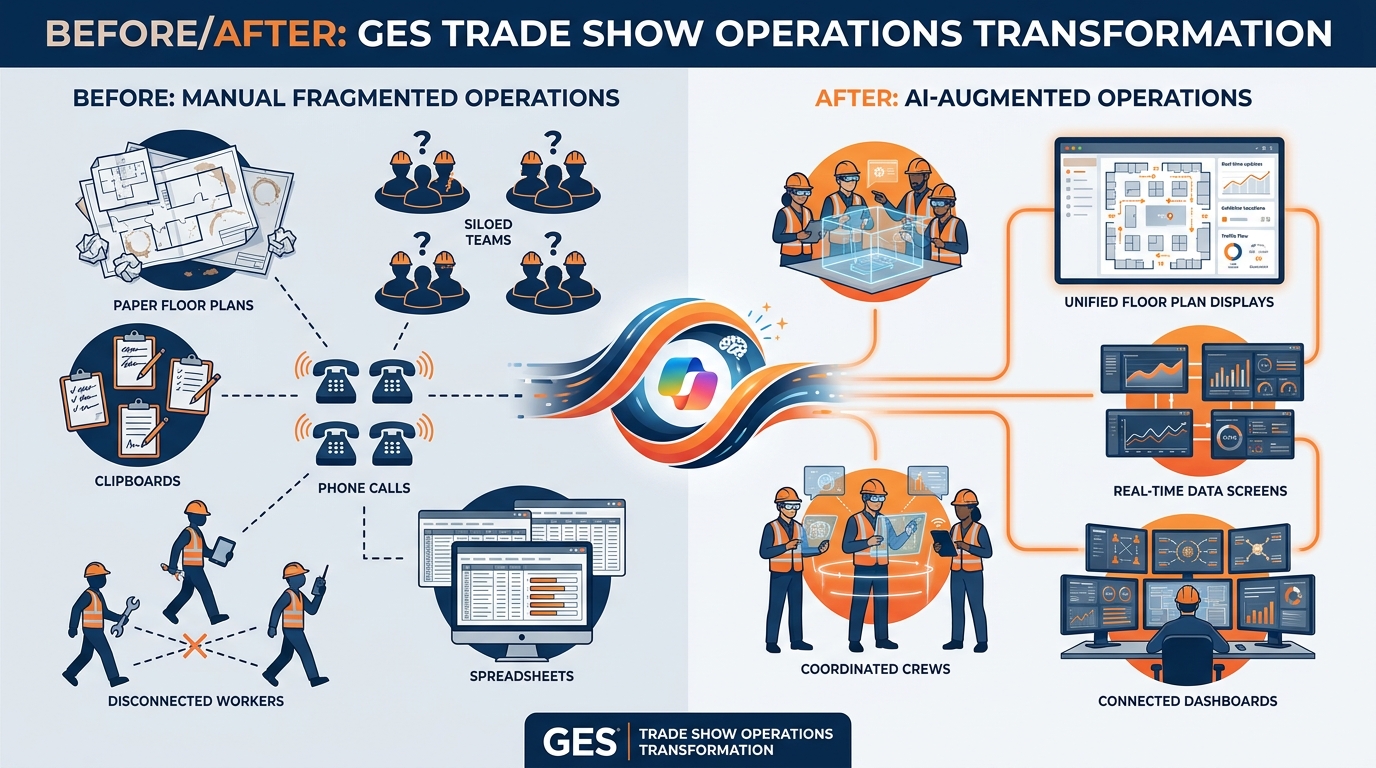
Figure 1:The AI transformation journey — from curiosity to mastery. This master class is your roadmap.
“The illiterate of the 21st century will not be those who cannot read and write, but those who cannot learn, unlearn, and relearn.” — Alvin Toffler
There are rare moments in history when a new technology doesn’t just improve how we work — it fundamentally redefines what work means. The steam engine ended the era of manual labor as the primary source of economic power. The shipping container rewrote global logistics and made the modern trade show possible. The internet collapsed the cost of information to near zero. Artificial intelligence, and specifically the large language model revolution we are living through right now, is doing something arguably more profound: it is democratizing cognitive leverage.
For the first time in history, every professional at every level of an organization has access to something that used to be reserved for the most elite: an infinitely patient, extraordinarily well-read thinking partner available around the clock, at zero marginal cost, with expertise spanning logistics, design, contracts, finance, communication, data analysis, and virtually every other domain of human knowledge. That thinking partner is already sitting inside your Microsoft 365 account. It is called Copilot.
And as of June 16, 2026, it has a second gear. Microsoft released Copilot Cowork into general availability — a layer that doesn’t just answer your question, it does the work. More on that in a moment.
This book is your master class for understanding it, using it, and — most importantly — thinking with it.
1.1A Note from Our Founders
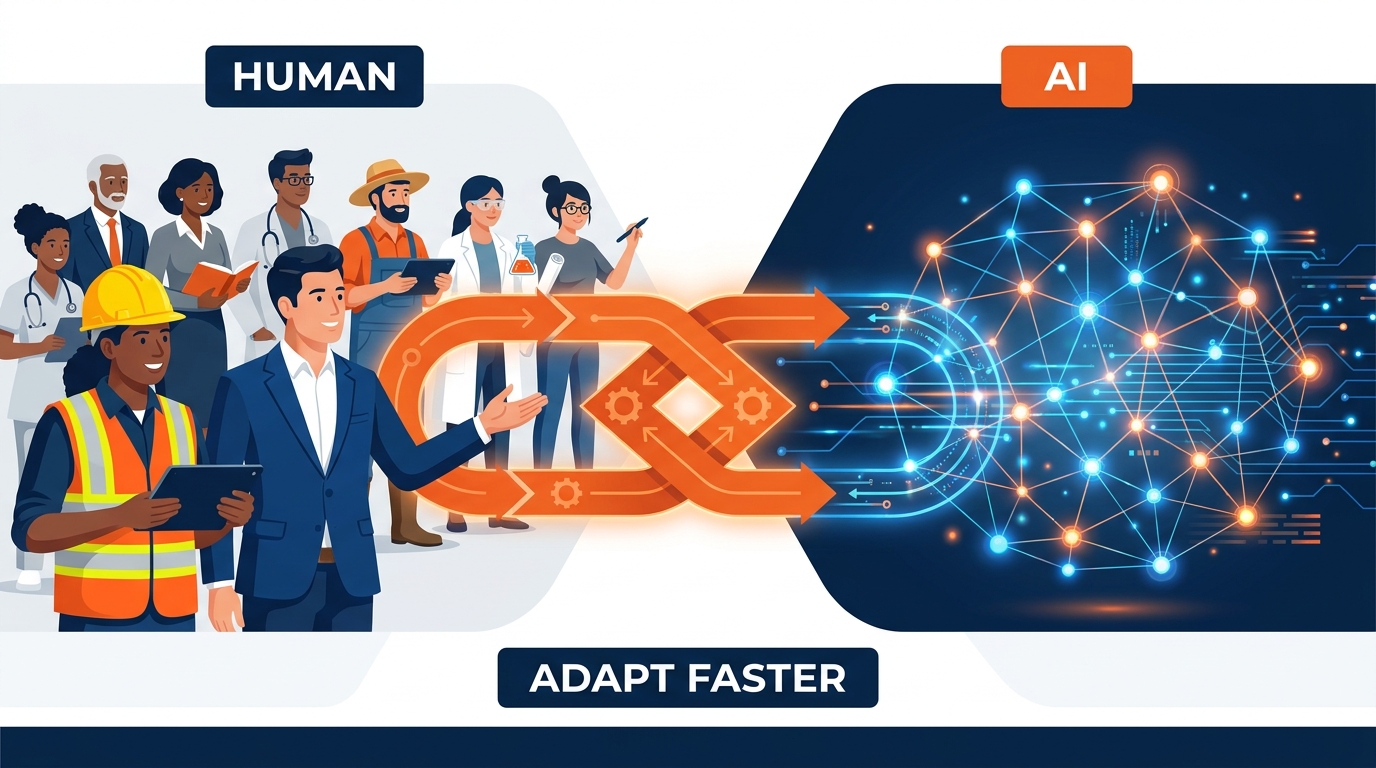
Figure 2:The thesis behind this program: AI capability is only worth what human adaptability can absorb.
This master class was built for GES by behmn.com (behmn.com) — a firm founded on a single idea, which is also its tagline: Be Human, adapt faster.
We describe our work as the glue that binds AI capabilities with human adaptability. That phrase is doing more work than it might appear. The bottleneck in enterprise AI has almost never been the technology. Models improve on a schedule measured in months. Organizations absorb change on a schedule measured in years. The gap between those two curves is where transformation budgets go to die — not because the tools failed, but because the humans were handed a capability without being handed a way to adapt to it.
Closing that gap is the entire purpose of this book.
From the Founder & CEO
When we started behmn.com, the prevailing story about AI was that it would replace people. We thought that story was not just wrong — it was strategically expensive. It caused organizations to invest in tools while under-investing in the only thing that determines whether tools matter: whether people actually change how they work.
GES is exactly the kind of company we built this firm to serve. Not a software company where AI adoption is a foregone conclusion, but an operating company — one where the work is physical, the deadlines are immovable, and a mistake shows up on a show floor in front of a client. AI has to earn its place in an environment like that. It cannot be a demo. It has to survive contact with a move-out at two in the morning.
What you will find in these pages is not a technology tour. It is a set of working habits, built for your work, that we believe will still be useful long after the specific product names in this book have changed.
Adapt faster.
Alex Schwartz, Founder & Chief Executive Officer, behmn.com
From the Chief Data Officer & Co-founder
Alex and I started this firm from opposite ends of the same problem. He was watching organizations buy capability they could not absorb. I was watching the technology outrun the people expected to use it — not because the people were slow, but because nobody had bothered to translate.
Translation is the work. Not simplification — translation. A freight coordinator does not need to know what a transformer architecture is. They need to know that if they hand the model more context, they get a better answer, and that the number it hands back still has to be checked before their name goes on it. Those two sentences are worth more than a semester of theory.
That is the standard I hold this book to. If a page does not change what you do on Monday, it should not be in here.
Dr. Ernesto Lee, Chief Data Officer & Co-founder, behmn.com
1.2A Message from the Author
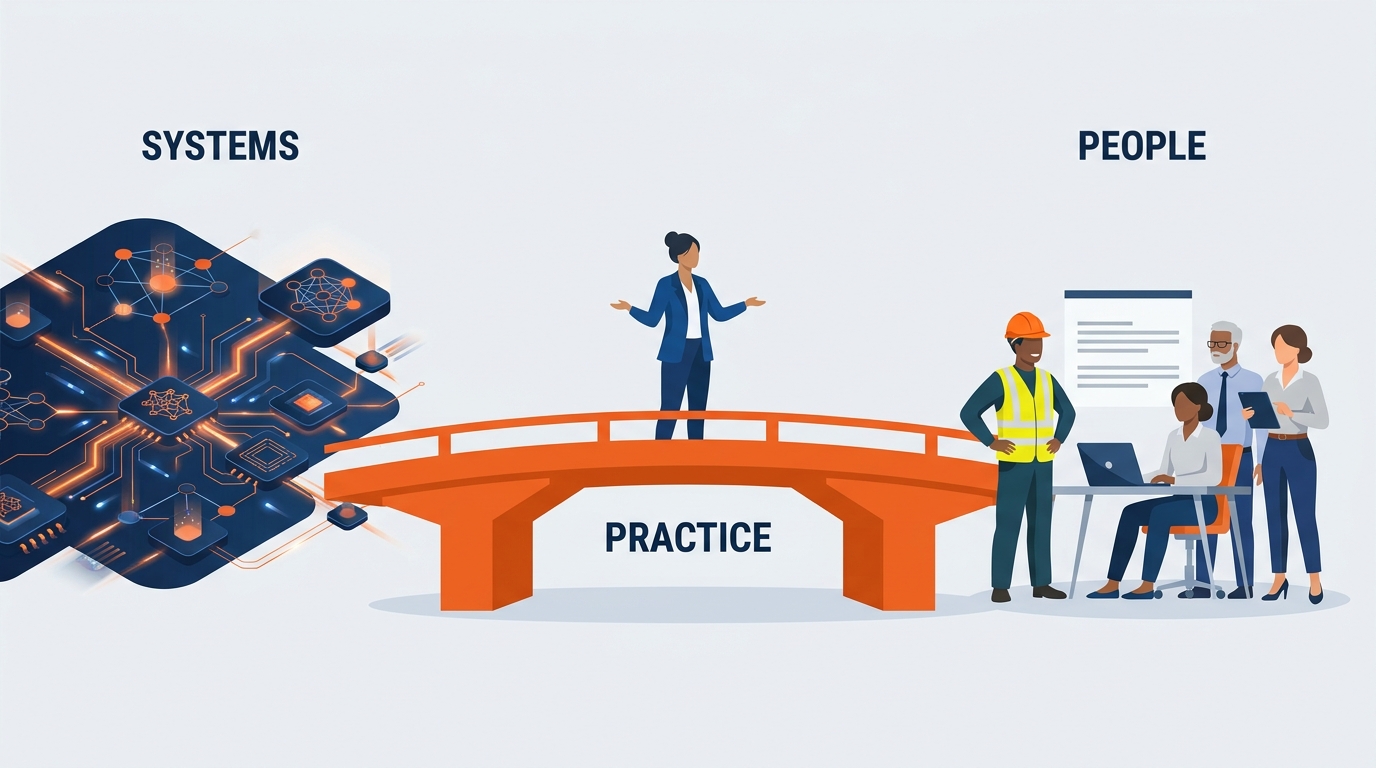
Figure 3:This book is a practitioner’s book. Every technique in it has been run against real work before it was written down.
I want to tell you why this book exists, and why it is written the way it is.
I have spent my career in two worlds that rarely talk to each other. In one, I work with data and AI systems — building them, breaking them, and figuring out where they actually hold up under load. In the other, I teach. Not to engineers, mostly. To people with real jobs and no patience for jargon, who need a thing to work on Monday morning and do not care what architecture it runs on.
Those two worlds produce very different books about AI. The technical one produces books that are correct and useless. The teaching one produces books that are inspiring and empty. I have tried to write the third thing: a book that is honest about how these tools actually behave, and specific enough that you can use them before you finish the chapter.
That is why the examples in this book are not generic. A generic AI book would tell you to “summarize a document.” This one asks you to summarize an exhibitor service kit, because that is a document you actually have, with quirks a generic example would never surface. It would tell you to “analyze a spreadsheet.” This one compares overtime within a union jurisdiction, because comparing across jurisdictions produces a number that looks fine and is wrong. The specificity is the point. Anything less would be a book about AI rather than a book about your work.
I also want to be direct about the limits, because most AI writing is not. These tools are extraordinary and they are also confidently wrong on a regular basis. They will invent a figure that looks plausible. They will produce a clean, well-formatted answer built on a stale rate sheet. Throughout this book, wherever a technique has a failure mode, I have written the failure mode down next to it. You should not trust anyone who sells you the capability without the caveat.
Here is what I actually want for you. Not that you finish this book impressed by AI — that is easy and worth very little. I want you to finish it with a handful of habits you keep. The habit of giving a tool enough context to be useful. The habit of checking the number before your name goes on it. The habit of noticing when a task you do every week is a task you should never do manually again.
Do that, and the specific products in these pages can change — and they will — without any of your skill going out of date.
Let’s get to work.
— Dr. Ernesto Lee Author; Chief Data Officer & Co-founder, behmn.com
1.3Why GES? Why Now?
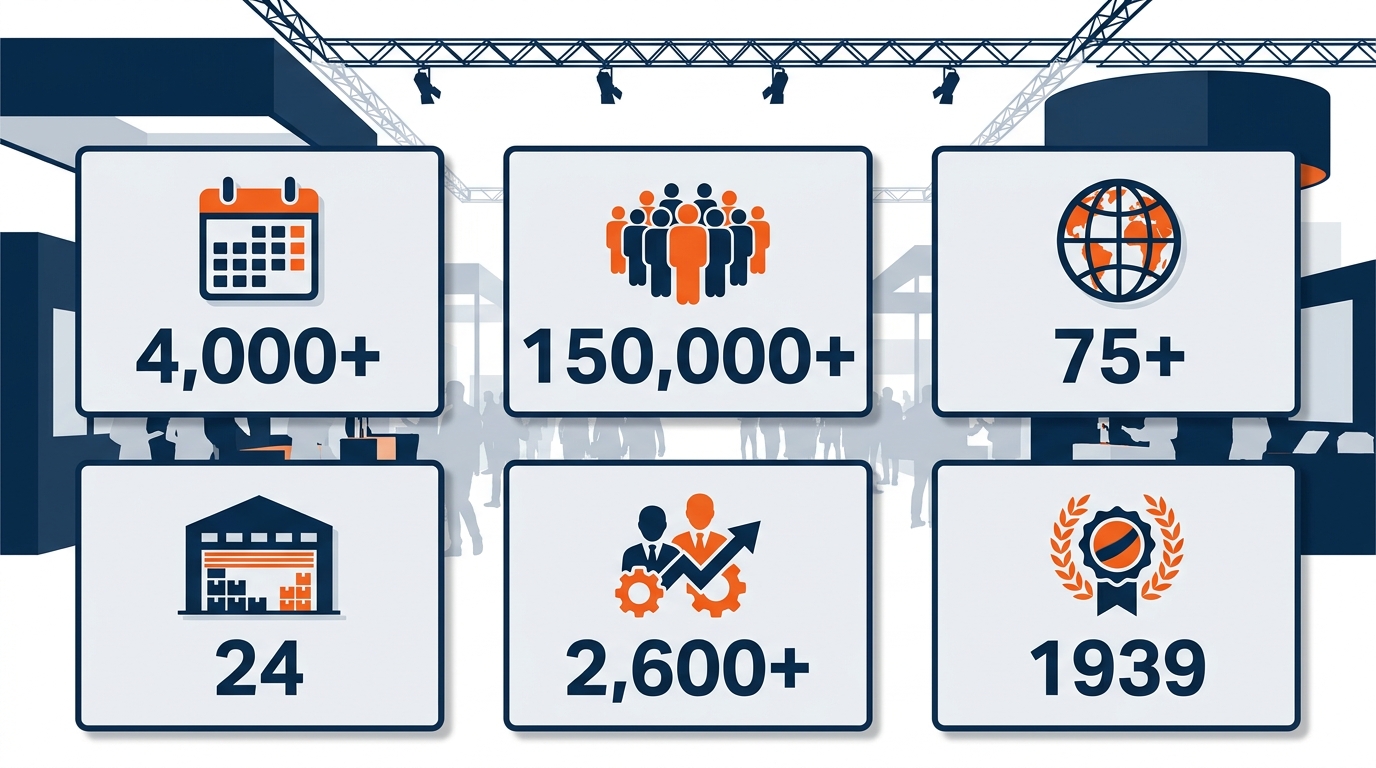
Figure 4:The operational surface area that makes AI compound at GES rather than merely help.
GES is not just a service contractor. It is a story of longevity, reinvention, and operational excellence that very few companies in any industry can match. What started in 1939 as a small sign and exhibit shop called Manncraft has become Global Experience Specialists — a company that now produces 4,000+ live experiences every year, serves 150,000+ exhibitors annually, operates in 75+ countries, runs 24 global warehouse and production facilities, and employs roughly 2,600+ people from its headquarters on Lindell Road in Las Vegas.
Think about the sheer operational surface area in those numbers. Every one of those 4,000 events has a floor plan, a labor forecast, a freight schedule, a set of freight targets, an advance warehouse window, a marshaling yard sequence, a move-in and a move-out. Every one of those 150,000 exhibitors has an order in the portal, a booth to install and dismantle, a service kit to decode, and a question they need answered today, not next week. Every one of those 75 countries has its own union jurisdictions or labor customs, its own customs paperwork and carnet requirements, its own venue rules.
That is not a company with an AI opportunity. That is a company where AI compounds.
And GES is doing this at a genuinely pivotal moment. On December 31, 2024, GES completed its separation from Viad Corp and became an independent company under Truelink Capital — the first time in 55 years that GES has controlled its own strategy, its own capital allocation, and its own technology roadmap. That is not a footnote. That is the whole context for this book. For five decades, the roadmap was set somewhere else. Now it is set here.
The GES Collective already reflects that ambition: GES Exhibitions as the General Service Contractor backbone, Spiro as the global experiential agency and Exhibitor Appointed Contractor, onPeak for event accommodations, SHOWTECH for power and lighting, and Visit by GES for registration, lead capture, and event technology. Five brands, one operating system, one set of values.
And GES is not theorizing about AI. In 2026, onPeak launched the AI Smart Suite — AI-powered hotel search, an AI contract reader, and automated email categorization — building on the AI-driven onPeak Compass accommodation platform. Visit by GES shipped next-generation NFC Touchpoints. GES EMEA built a data-led emissions reporting program to support the Roadmap to Net Zero. The AI work has already started. The question is how fast it spreads to the rest of the organization.
The question is not whether AI will reshape the exhibitions and experiential marketing industry. It already has. The question is whether the professionals inside GES will shape how that transformation happens, or whether they will watch from the sidelines while the opportunity passes them by.
This master class says: you will not watch. You will lead.
1.4Anchored in T.R.U.E.
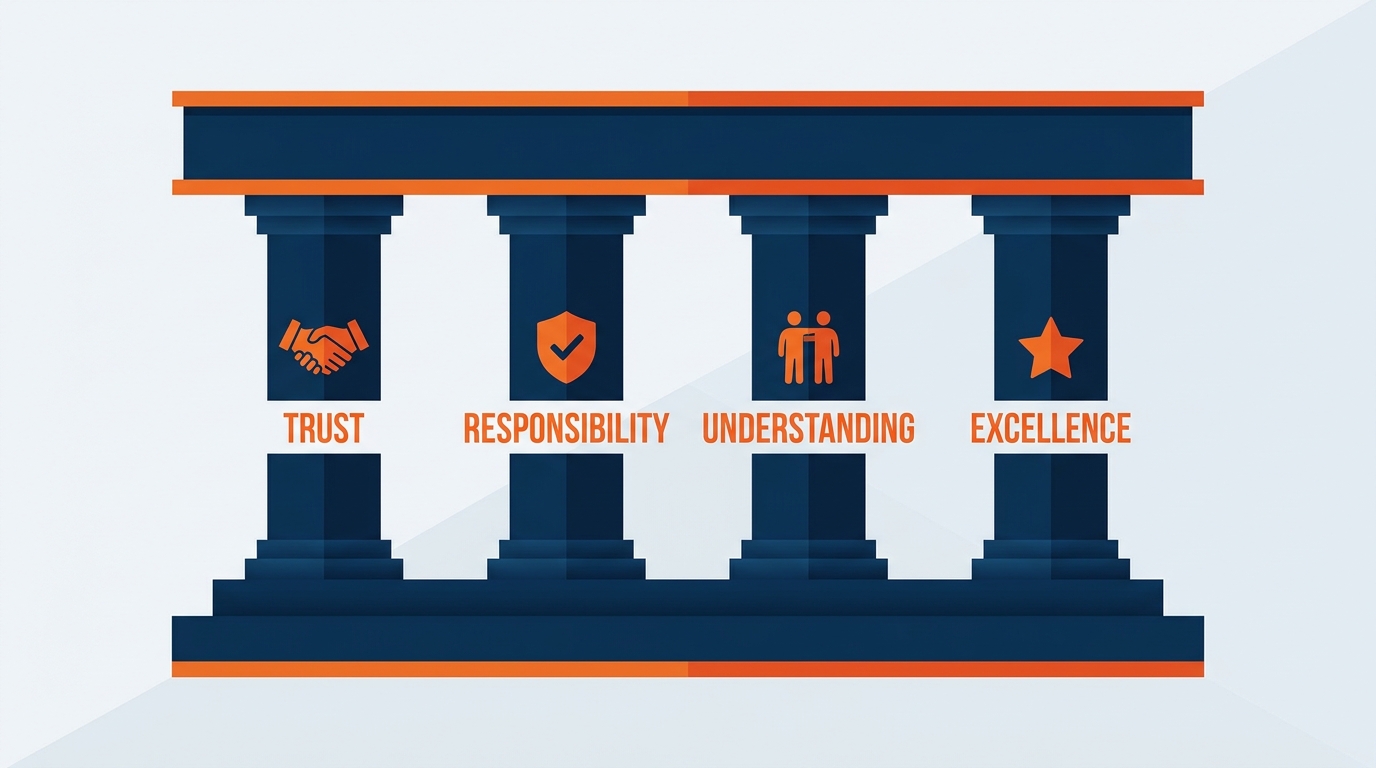
Figure 5:Trust, Responsibility, Understanding, Excellence. AI does not replace these values — it tests them.
Everything in this book sits on top of the four values GES already lives by. AI does not replace them. It tests them.
| Value | What it means at GES | What it means with AI |
|---|---|---|
| T — Trust | Trust each other to always be honest and do what’s right | AI is a tool, not an oracle. Verify outputs. Never let a machine speak for you without you reading it first. |
| R — Responsibility | Be responsible for our actions and deliver on our commitments | Your name is on the deliverable. AI does not absolve you of the drayage number, the labor estimate, or the safety note. You own it. |
| U — Understanding | People come first. Be understanding and compassionate | AI augments people; it does not replace the floor manager who reads a room, or the account lead who knows what an organizer really needs. |
| E — Excellence | Provide excellent service and execution | AI raises the floor for everyone. Humans raise the ceiling. Use the time it gives back to do the work only you can do. |
If you remember nothing else from this introduction, remember that framing. AI raises the floor. You raise the ceiling.
1.5What This Book Is
Think of this as a TED talk you can read. We are not going to burden you with academic jargon or lengthy technical treatises. We are going to answer the questions that actually matter to you, as an exhibitions and experiential professional:
What exactly is AI? Not the science fiction version. The real version. And what can it actually do?
What is Microsoft Copilot and how does it work inside your daily tools?
What is Copilot Cowork, and when should you delegate an entire task instead of asking a question?
How do I use it to become measurably better at my job — whether that job is on the show floor, in the warehouse, in the design studio, or at a client’s table?
What are the rules, risks, and responsibilities that a professional like you needs to understand?
How do I move from simply using AI to genuinely thinking with AI?
This book won’t just give you knowledge. It will give you a new relationship with thinking itself.
1.6Copilot, and Now Cowork
Most people meet AI as a conversation. You ask, it answers. You refine, it revises. That is Microsoft 365 Copilot, and it is genuinely useful: summarize a 60-page exhibitor service kit, draft a reply to an organizer, build a first-pass deck, explain a formula in a labor reconciliation workbook.
Copilot Cowork, generally available since June 16, 2026, is a different mode of working. Instead of a conversation, it is a delegation.
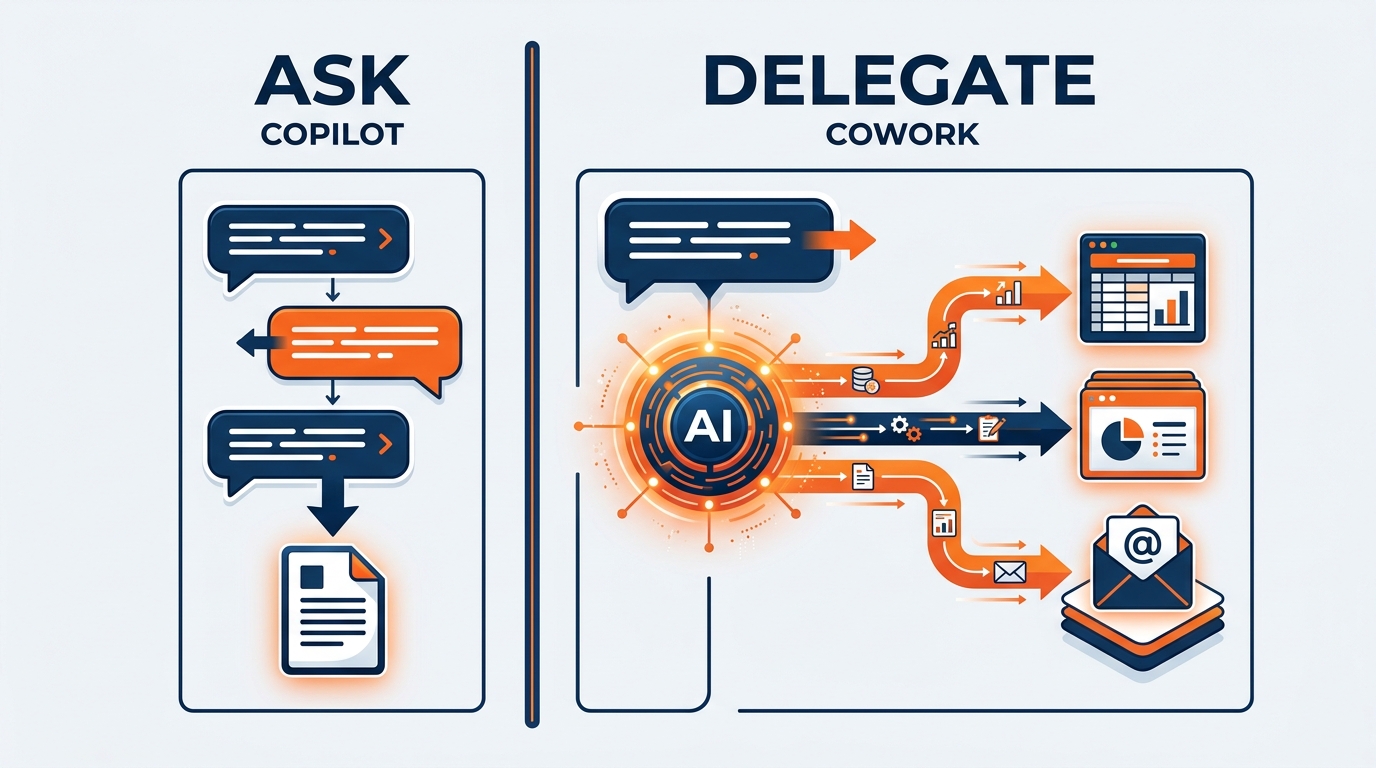
Figure 6:Ask versus delegate. One document is Copilot. A project is Cowork.
Cowork executes complex, long-running, multi-step tasks end to end across Outlook, Teams, Word, Excel, PowerPoint, and SharePoint — and returns completed results, not drafts you still have to assemble. A few things make it meaningfully different from the chat experience you may already know:
It runs in the cloud. Tasks keep running when your laptop is closed and you are walking the show floor, sitting in a marshaling yard, or on a flight to Dubai. You hand off the work, then you collect it.
It is grounded in Work IQ. It understands your organizational context — your files, your threads, your meetings, your people — rather than working from a blank page.
It stays inside the Microsoft 365 trust boundary. Your data stays governed by the same enterprise controls that already protect your email and your SharePoint libraries.
It is multi-model. Cowork runs on Anthropic’s frontier models — Claude Opus 4.8 and Claude Sonnet 4.6 — alongside Microsoft’s other model options, chosen for the depth of reasoning that long-horizon, multi-tool work requires.
It is billed by usage. Cowork consumes Copilot Credits on top of a Microsoft 365 Copilot license. That matters operationally: delegation is a resource, and like labor hours or freight weight, you should spend it where the return is highest.
Here is the practical distinction, in GES terms:
| You want to... | Use |
|---|---|
| Summarize the exhibitor service kit for a single show | Copilot |
| Reconcile move-out labor hours across six shows, build the variance workbook, write the summary memo, and drop it in the SharePoint show library | Cowork |
| Draft one reply to an organizer’s scope question | Copilot |
| Read 40 inbound exhibitor emails, categorize them by issue type, draft responses for the routine ones, and flag the exceptions for a human | Cowork |
| Explain a drayage calculation | Copilot |
| Pull freight data from three sources, build the cost-per-show analysis, produce the recap deck, and share it with the account team | Cowork |
Throughout this book, when a workflow is big enough to be worth handing off rather than steering turn by turn, we will flag it. Learning when to delegate is a skill in itself — the same judgment you already apply when deciding what to keep in house and what to hand to a trusted partner on site.
1.7The Arvin Ash Principle
There is a science communicator on YouTube named Arvin Ash whose channel has captivated millions of people with a seemingly simple approach: take the most complex ideas in physics, mathematics, and technology, and explain them using nothing but analogies and curiosity. No unnecessary jargon. No condescension. No hand-waving. Just the real concept, explained so clearly that you can share it with someone at dinner that same night.
That is the operating principle of this book.
Every concept we cover — from Large Language Models to context windows to AI agents — will be explained the way Arvin would explain it: starting with something you already know, building a bridge to the new idea, and then revealing the implications that should genuinely surprise you. Because they should. The implications of what you are about to learn are genuinely astonishing.
And because this is GES, the bridge we build will start from things you already live with: a freight target, a floor plan revision, an aisle carpet order that changed at 11 p.m., a labor call that has to be right the first time.
1.8Who This Book Is For
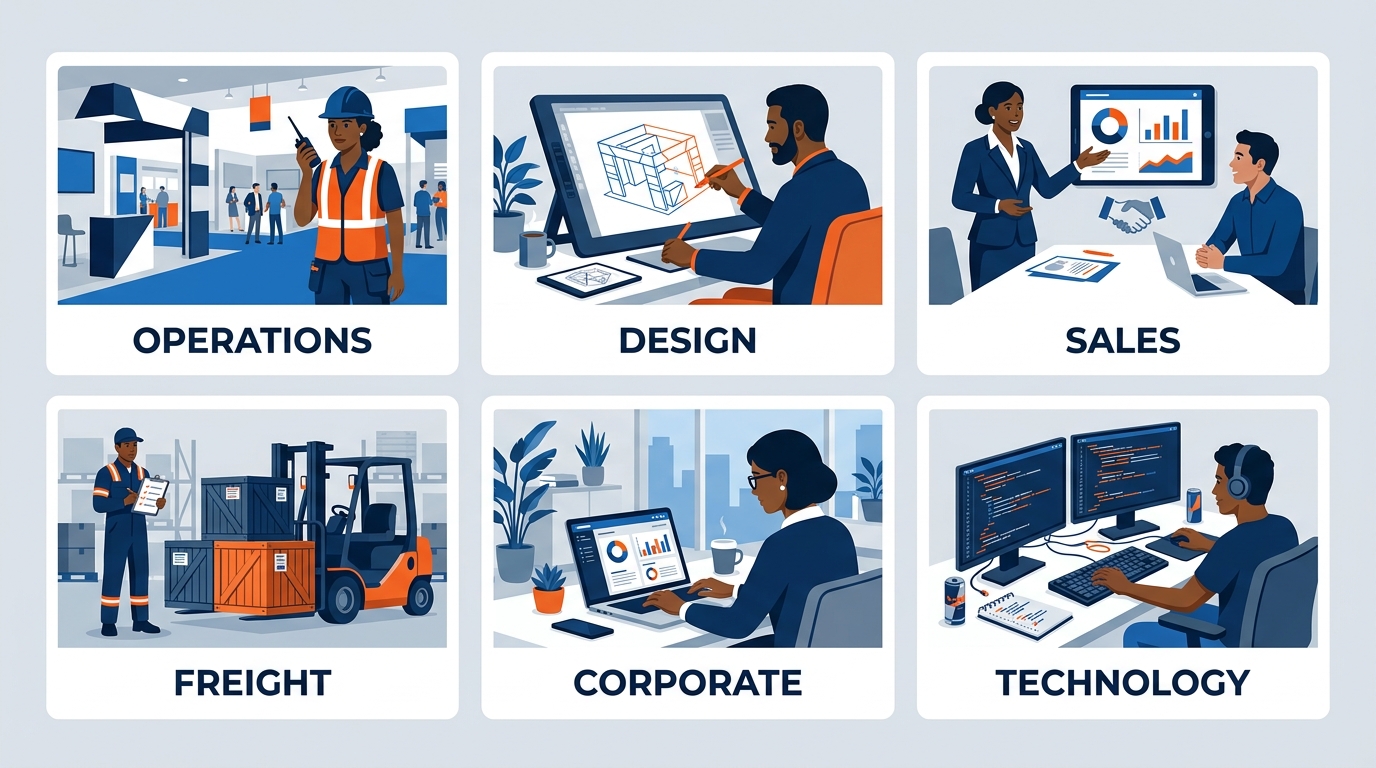
Figure 7:Six audiences, one book. GES is not a company of desk workers, and this material does not pretend otherwise.
GES is not a company of desk-bound knowledge workers, and this book does not pretend otherwise. The examples in these chapters are written for the whole organization:
Show and event operations — floor managers, labor coordinators, venue leads. Mobile-first, deadline-driven, on site. AI that works on a phone between hall walks.
Creative and design — exhibit designers, environmental designers, graphics production. Concept narratives, spec documents, client-facing design rationale.
Sales and account management — exhibition sales, organizer relationships, agency accounts. RFP responses, QBRs, renewal decks, pipeline hygiene.
Logistics and freight — advance warehouse, material handling, marshaling yard sequencing, customs and carnets, international shipping.
Corporate functions — finance, People & Culture, legal, marketing, IT. The engine room behind 4,000 events a year.
Technology product teams — onPeak, Visit by GES. Already building AI; here to sharpen how they use it day to day.
If you recognize your job in that list, you are the audience. If you recognize someone else’s job in that list, even better — a lot of the value in this book comes from the handoffs between those groups.
1.9How to Use This Book
This is a hands-on master class. Every chapter includes “Try This” exercises that take you directly into your Microsoft 365 environment and have you interact with Copilot in real time. The exercises are not optional homework. They are the actual learning. Reading about a bicycle and riding a bicycle are entirely different experiences.
You will need:
A Microsoft 365 account with Copilot enabled (check with your IT administrator)
Access to m365
.cloud .microsoft — this is your front door to Enterprise Copilot Copilot Cowork access, if your license includes it, for the delegation exercises (your IT administrator can confirm whether Copilot Credits are enabled for your team)
About 15 minutes of focused time per chapter for the exercises
No prior technical knowledge is required. If you can write an email, you can learn to use AI. If you can brief a crew on a move-in sequence, you can already write a good prompt — you just haven’t been told that’s what it is.
1.10A Note on Voice
This book will speak to you directly. We will use “you” throughout because this transformation is personal. What AI does for your career, your productivity, and your value inside GES is determined by what you choose to do with it. The tools are neutral. The results are up to you.
One more thing before we begin. There is a quiet revolution happening in how people interact with AI that we want to put in front of you early. Tools like Wispr Flow and Super Whisper allow you to speak to your computer — to your AI — the same way you would speak to a colleague. Instead of typing out your prompts, you simply talk. Your words are transcribed and sent to Copilot in real time. People who adopt voice-first AI interaction report that their outputs are dramatically better: more natural, more nuanced, more complete. The reason is simple — we speak far faster than we type, and we explain things more naturally in speech than in writing.
For a workforce that spends a lot of its life standing on a show floor with a radio in one hand and a floor plan in the other, that is not a novelty. That is the difference between capturing a punch list while you’re walking it and trying to remember it three hours later.
Before this program is over, we want you to try it. You may never go back.
1.11What’s Ahead
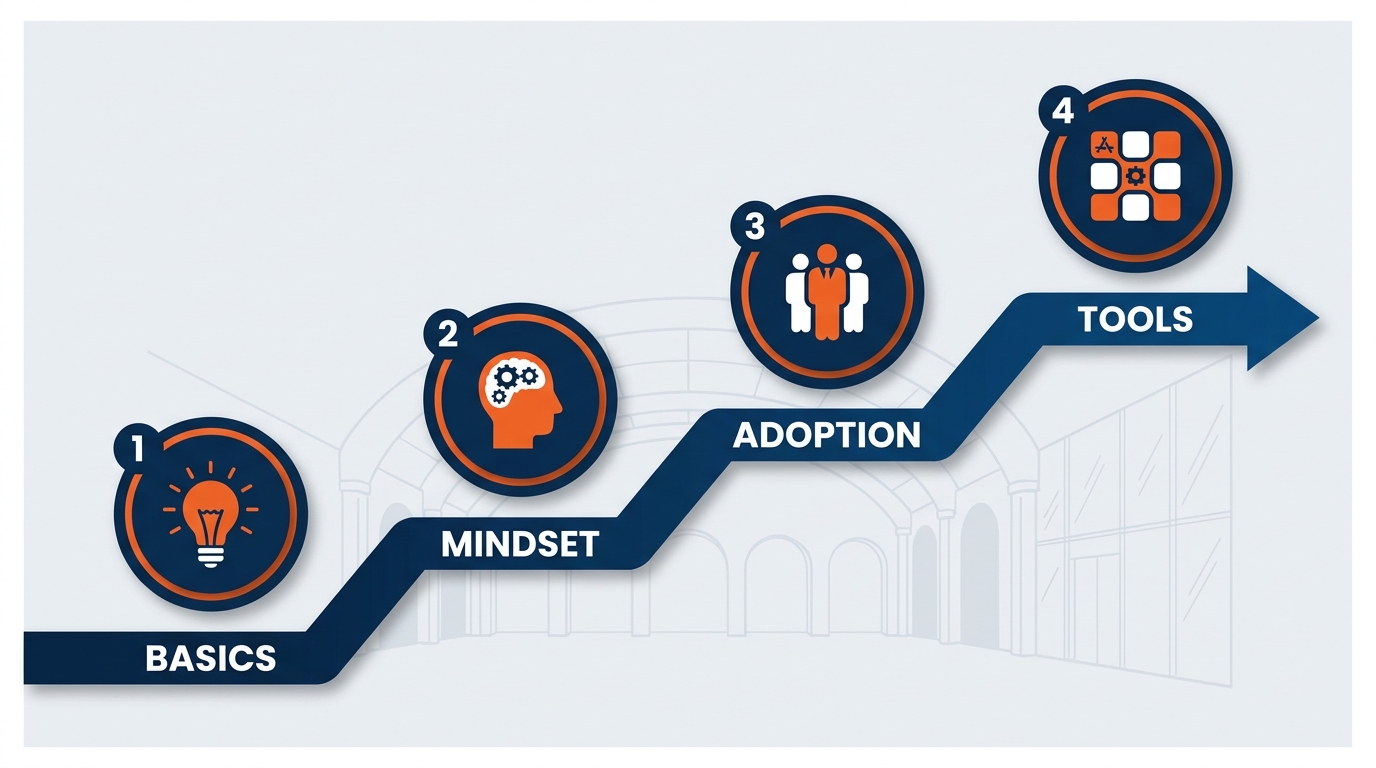
Figure 8:The path ahead: foundations, then the human side, then hands-on work in the tools.
In Chapter 1: The Essentials, we build your complete conceptual foundation. You will understand what a Large Language Model actually is, how tokens work, what context engineering means and why it is the most valuable skill in the AI era, how to set your AI’s persona, how to communicate with AI like an expert (meta-prompting), how your data is already connected to Copilot, and what an AI agent is and how to build your first one.
From there, the book moves through the mindset shift, change management, and adoption — the human side of this, which is the part that actually determines whether a technology sticks — and then into hands-on work in Word, Excel, PowerPoint, Teams, OneNote, and SharePoint, using show operations manuals, labor forecasts, post-show recaps, cross-timezone show teams, site survey notes, and venue knowledge bases as the material.
By the time you finish Chapter 1, you will not just know about AI. You will have used it in ways that are directly relevant to your work at GES. You will have seen it respond to your email, your calendar, your show data. You will have built something.
Let’s get started. The hall is open. The floor is waiting.