1Chapter 3: Change Management
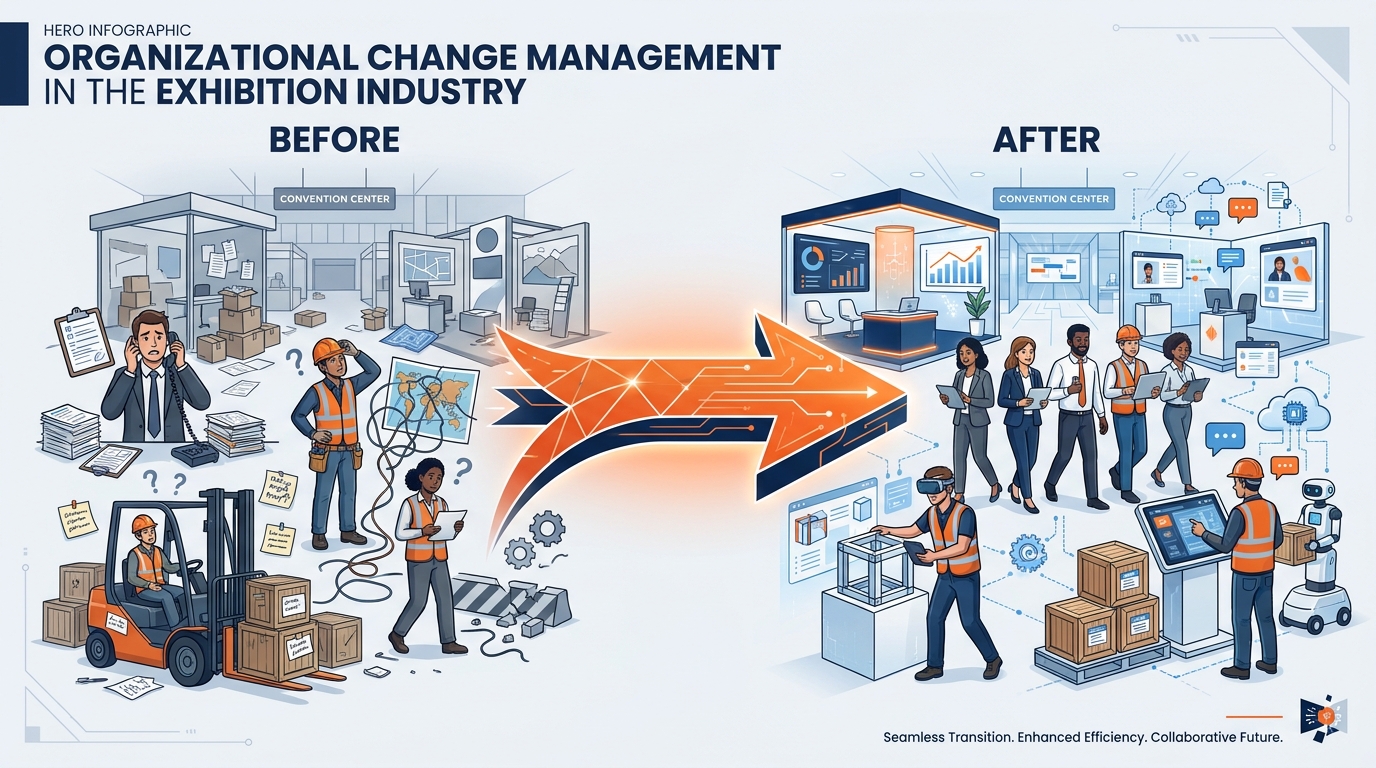
Figure 1:One person’s mindset shift becomes a show team’s new normal, which becomes a facility’s standard practice, which becomes a global organization’s competitive advantage. Change radiates. It does not cascade.
“Culture does not change because we desire to change it. Culture changes when the organization is transformed — when organizations take new actions, new behaviors become the norm.” — Frances Hesselbein
Here is a scene that plays out in companies all over the events industry, right now.
The CEO sends an email to all staff: “AI is a strategic priority for us. We are committed to responsible adoption. Training resources are available. Please reach out to your manager with questions.”
Ninety days later: nothing has changed. The exhibitor service kit still gets rebuilt from scratch every show. The labor forecast still gets typed into a spreadsheet by hand at 11 p.m. the night before move-in. The post-show reconciliation still takes three weeks.
Not because the people don’t care. Not because the tools don’t work. Not because the strategy is wrong. But because a message is not a movement. An email is not a transformation. And announcing a priority is not the same thing as building a system for adopting it.
Chapter 2 gave you the personal operating system — the mindset. This chapter gives you the organizational operating system — the change architecture. How you take what you now believe about AI, what you’ve started to practice, and what you’re beginning to build — and turn that into something that outlasts you. Something that spreads across a show team, across a warehouse, across a region.
Because the most important thing a GES professional can do with their AI capability is not just use it better. It is multiply it — across their team, their facility, and their organization.
That is what this chapter is about.
1.11. The Burning Platform We Actually Have — Independence
Most change management programs have to manufacture a sense of urgency. GES does not. We are living inside one.
On December 31, 2024, GES completed its separation from Viad Corp and became an independent company backed by Truelink Capital. After 55 years as a segment inside a larger public holding company, GES controls its own roadmap for the first time in more than five decades.
Sit with what that actually means operationally.
For 55 years, capital allocation, technology investment, systems modernization, and platform decisions were negotiated inside a portfolio where GES was one line among several. Priorities were shared. Timelines were shared. Investment competed against businesses with nothing to do with exhibitions.
That is over. The decisions about how GES works — what tools we adopt, how fast we move, which processes we rebuild — are now made by people who wake up thinking about show floors, drayage, install & dismantle, exhibitor experience, and creative production. Nobody else. Us.
Here is the scale that makes this urgent rather than merely interesting. GES delivers 4,000+ live events a year. We serve 150,000+ exhibitors annually. We operate in 75+ countries with 24 global production and warehouse facilities and roughly 2,600+ employees. We have been doing this since 1939 — 86 years of accumulated operational knowledge, most of it living in people’s heads, email threads, and spreadsheets that only one person truly understands.
At that scale, a small improvement is not small. Fifteen minutes saved per exhibitor service inquiry, applied across 150,000 exhibitors, is not a productivity tweak — it is a structural change in what the company can absorb without adding headcount. Two hours saved per show on post-show reconciliation, applied across 4,000 events, is a full-time year of human attention returned to the work that actually requires judgment.
That is the arithmetic of scale. AI does not have to be dramatic at GES to be transformative. It only has to be consistent.
And we already have proof it works here.
1.22. Why Change Fails — And the One Thing That Works
Let us start with the uncomfortable data.
We already know from Chapter 2 that only 5% of companies globally qualify as “future-built” for AI — meaning they have genuinely restructured how they work, not just added AI tools to their existing processes. Meanwhile, 60% report minimal or no measurable value from their AI investments despite real financial commitment.
Why?
The answer is not technology. McKinsey’s research is definitive on this point: 55% of organizations that are seeing AI returns redesigned their workflows. They did not add Copilot to the old way of doing things and expect it to be transformative. They asked: “Given that this tool exists, what is the new right way to do this work?” And then they built that new way.
The organizations that are not seeing returns are, almost universally, running the old process with a new tool sitting next to it. Copilot open in one tab, the same manual workflow proceeding in another. The exhibitor service kit still assembled by copying last year’s file. The labor forecast still built by hand. The tool gets used for occasional convenience. The fundamental way of working never changes.
This is not a technology problem. It is a workflow redesign problem — which is, at its heart, a change management problem.
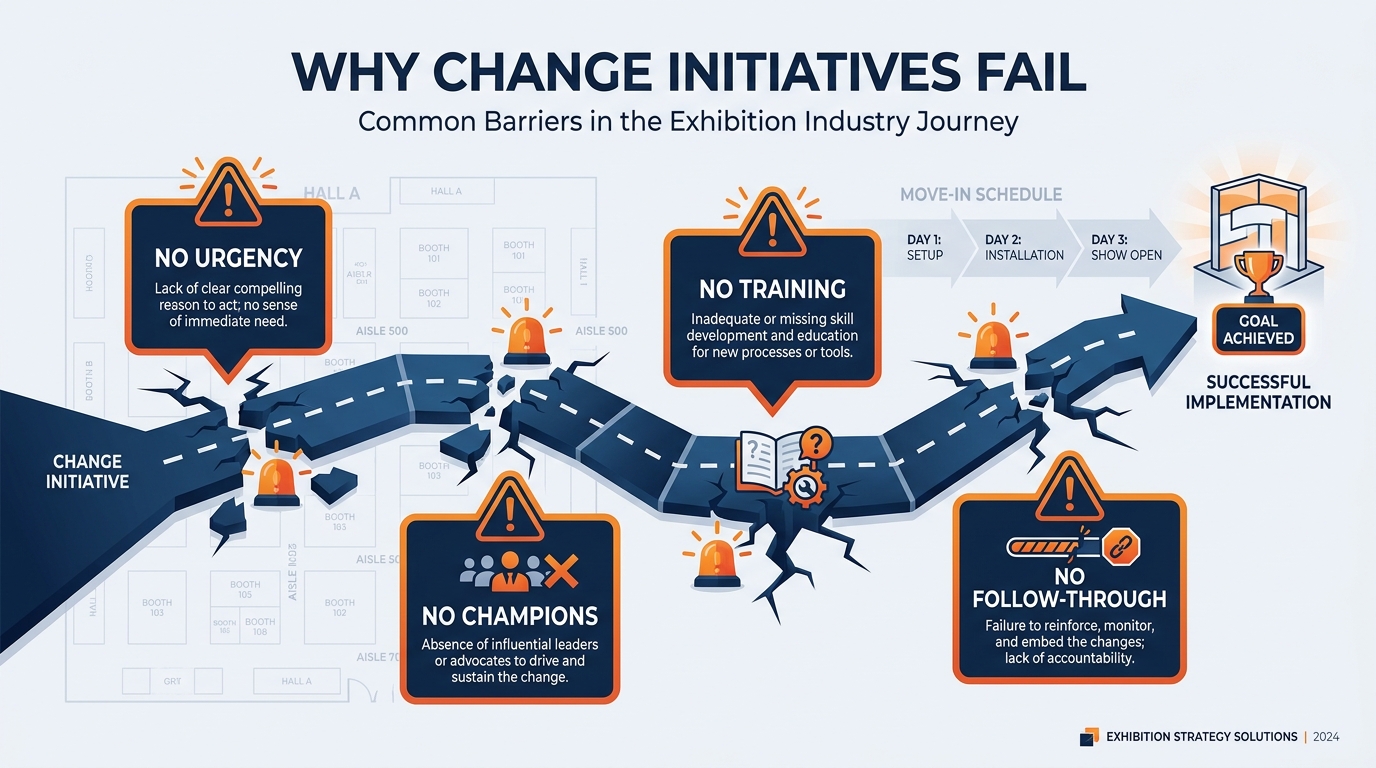
Figure 2:The technology is not the variable. The workflow is. Organizations that redesign how work gets done — not just which tool they use — are the ones capturing exponential returns.
Consider the shape this takes on a real show. A general service contractor’s operations team runs move-in, manages union jurisdiction and labor calls, tracks freight from the advance warehouse through the marshaling yard to the booth, handles exhibitor change orders in real time, then reconciles labor hours and material handling charges after move-out. Every one of those steps generates documents, messages, and numbers.
The tool-first version of AI adoption: everyone gets a Copilot license, and the ops manager occasionally uses it to clean up an email.
The workflow-redesign version: the exhibitor service kit is generated from the show’s parameters rather than copy-pasted; the daily move-in status update writes itself from the freight tracking data and the ops team edits it; the post-show reconciliation narrative drafts itself from the labor actuals and the ops lead applies judgment to the exceptions; the site survey notes from OneNote become a structured venue knowledge base instead of a personal notebook.
Same tool. Radically different outcome. The difference is entirely in whether someone stopped and redesigned the work.
The good news: workflow redesign does not require a top-down transformation initiative. It does not require a six-month consulting engagement. It does not require IT to rebuild anything.
It requires one person — perhaps you — to ask: “What if we just didn’t do it the old way anymore?” And then to prove that the new way works on one show. And then to show someone else.
That is how every lasting technology adoption in history has actually happened. Not from the top. From the middle. From the practitioners who tried something on a real job, discovered it worked, and couldn’t stop talking about it.
1.33. Three Frameworks That Actually Work
Change management as a field has accumulated an enormous library of frameworks, most of which are useful in academic contexts and largely ignored in practice. We are going to focus on three — not because they are the most academically sophisticated, but because they map directly to what is actually happening when AI adoption succeeds or fails inside an operationally intense, globally distributed events company.
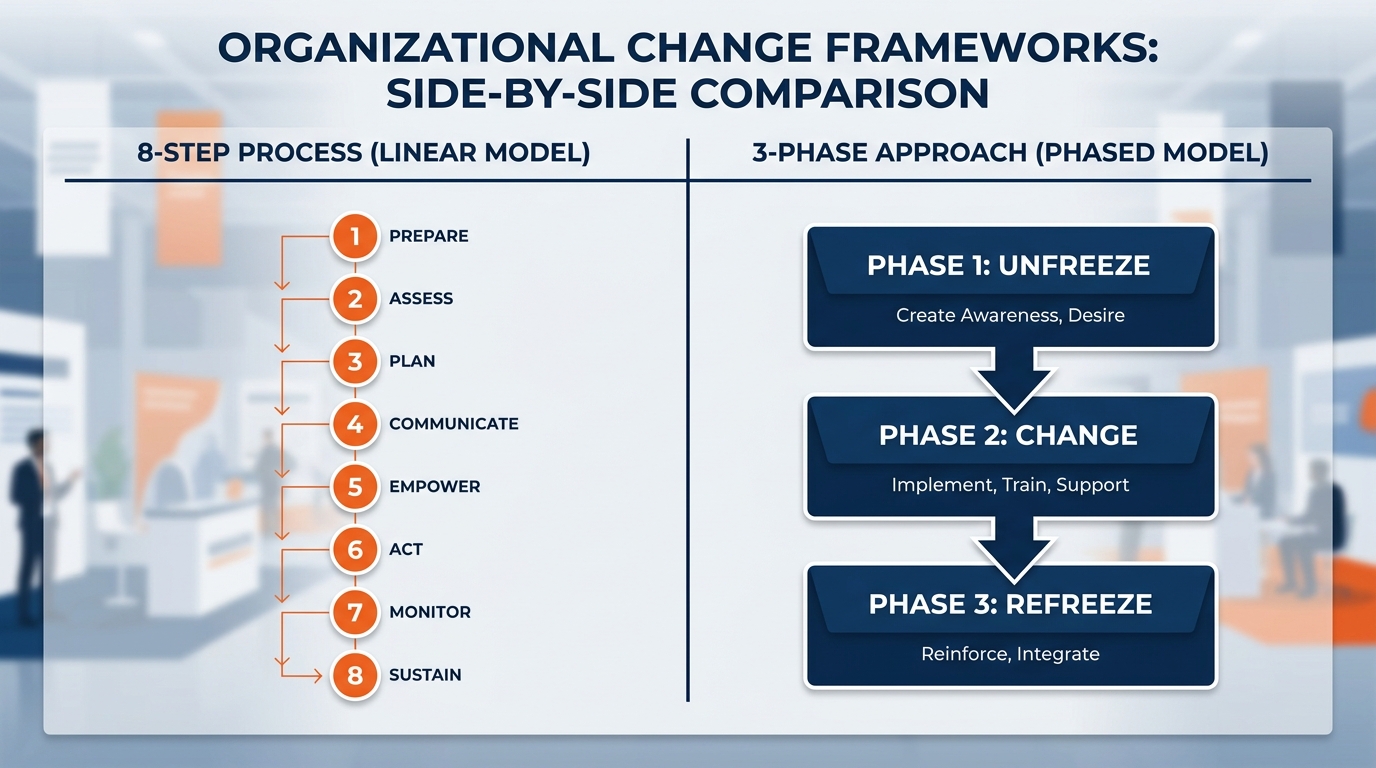
Figure 3:Three frameworks, one purpose: making change stick instead of fade. Each illuminates a different dimension of the same transformation.
1.3.1Kotter’s 8-Step Model — The Organizational Staircase
John Kotter’s framework, developed from studying hundreds of organizational transformations over 30 years, identifies eight conditions that must be met for change to take hold. Miss any one of them, and the change stalls. Understanding where your organization — or your show team, or your facility — is on this staircase tells you exactly what to do next.
Table 1:Kotter’s 8 Steps — Applied to GES AI Adoption
Step | What It Means | What It Looks Like at GES |
|---|---|---|
| People must feel the need to change — not just be told about it | We are independent for the first time in 55 years. We control our own roadmap. The window for rebuilding how we work is open now — and it closes. |
| Change requires a cross-functional group of champions, not just top-down mandate | Identify 3–5 respected practitioners across show ops, creative & design, sales, logistics, and corporate who believe in this and will model it |
| People need to see where they are going, not just what they are leaving behind | “In 12 months, every exhibitor service kit is first-drafted by AI. Every post-show recap deck starts from data, not a blank page. Every site survey becomes searchable venue knowledge.” |
| You need early adopters before you need everyone | Don’t try to convert the skeptics first. Find the curious — the ops coordinator who already automates their own tracker. Start there. |
| The biggest barrier is usually permission, not skill | Make it safe to experiment. Say out loud that using Copilot on a real show document is expected, not risky. Celebrate attempts, not just successes. |
| People need evidence it works before they commit | onPeak’s AI Smart Suite is the first win. Showcase Projects (Part IV of this book) are engineered to produce the next ten. |
| Early wins get used to justify slowing down. Don’t let that happen. | Use wins to expand across facilities and regions, not to declare victory after one show. |
| Change becomes the new default — not a project, but the way we work | AI-assisted workflows are in show ops onboarding, in the I&D crew lead checklist, in the design team’s Workfront intake. New hires learn them on Day 1. |
The most common failure point in AI adoption at operationally driven companies is steps 4 and 5: organizations try to enlist everyone at once (skipping the volunteer army) and fail to remove the real barriers (usually permission and time, not training). Fix those two steps and the rest follows faster than you expect.
Step 1 deserves a note of its own. Urgency is not fear. Telling a floor crew that AI will make them obsolete is not urgency — it is a threat, and threats produce compliance at best and quiet sabotage at worst. Real urgency at GES sounds like this: “For the first time in five decades, the decisions about how this company works get made by us. Let’s not spend that freedom doing everything exactly the way we did it under the old structure.”
1.3.2ADKAR — The Individual Change Model
Kotter describes the organizational staircase. ADKAR, developed by Jeff Hiatt at Prosci, describes the individual journey. Because organizations don’t change — people do. And they change one at a time.
ADKAR is an acronym for the five things an individual needs before they will sustainably adopt a new behavior:
card-carousel - Unknown Directive
card-carousel - Unknown Directive:::{card} **A — Awareness**
Understanding *why* the change is necessary. Not "AI is a strategic priority" — but *why*, specifically, your role and your work are affected and why now is the moment. For a labor coordinator, that means understanding how AI changes the forecast-to-actuals cycle, not hearing a corporate slogan.
:::
:::{card} **D — Desire**
Wanting to participate in the change. Awareness without desire produces compliance, not adoption. Desire comes from connecting the change to the person's own goals — fewer 11 p.m. reconciliation nights, fewer frantic exhibitor calls, more time on the parts of the job they actually chose.
:::
:::{card} **K — Knowledge**
Knowing *how* to change. This is where most training programs start — and where ADKAR reminds us it's the third step, not the first. Skipping A and D and going straight to K is why most training doesn't stick.
:::
:::{card} **A — Ability**
Being able to apply the knowledge. There is a gap between knowing how to do something and being able to do it under real conditions — on a show floor, at move-in, with a deadline and a client standing next to you. Ability requires practice, feedback, and patience.
:::
:::{card} **R — Reinforcement**
Having the change sustained and recognized. Without reinforcement — positive feedback, recognition, peer visibility — new behaviors revert. Reinforcement is not a nice-to-have. It is what separates a training event from a culture shift.
:::When AI adoption stalls at GES — on your show team, in your facility, across your region — diagnose which ADKAR stage is the bottleneck. Nine times out of ten, it is not Knowledge (people don’t know how). It is Desire (people don’t see why it matters to them personally) or Reinforcement (people tried it, it worked, and then nobody noticed).
Fix the right stage. Don’t add more training when the problem is recognition.
There is a GES-specific wrinkle here worth naming. Our workforce moves. A crew that just delivered a flawless move-in in Las Vegas may be in Chicago, Toronto, London, or Dubai three weeks later. Reinforcement in a distributed, travel-heavy organization cannot depend on being in the same room. It has to be built into the rhythms that already exist: the pre-show call, the daily ops huddle, the post-show debrief, the regional leadership sync. If reinforcement requires a new meeting, it will not happen. If it rides on an existing one, it will.
1.3.3Bridges’ Transitions Model — The Emotional Truth
William Bridges made a distinction that most change management frameworks miss entirely: the difference between change and transition.
Change is the external event. A new tool is deployed. A new process is mandated. A new owner takes over on December 31. Change happens on a calendar date.
Transition is the internal journey. It is how the people inside the organization move from the old way to the new one — emotionally, psychologically, professionally. Transition has three phases, and it does not start with the change. It starts with endings.
GES is currently running two transitions at once, and pretending otherwise helps nobody. The first is the ownership transition — independence after 55 years inside Viad. The second is the AI transition. People are in the Neutral Zone on both simultaneously.
That is not a reason to delay. It is a reason to connect them. A workforce already in motion is far easier to redirect than a workforce at rest. The worst possible sequencing would be to wait until the independence transition “settles” — because by then, the new habits will have set, and we will be asking people to change twice.
1.44. Why AI Adoption Fails — The Five Organizational Failure Modes
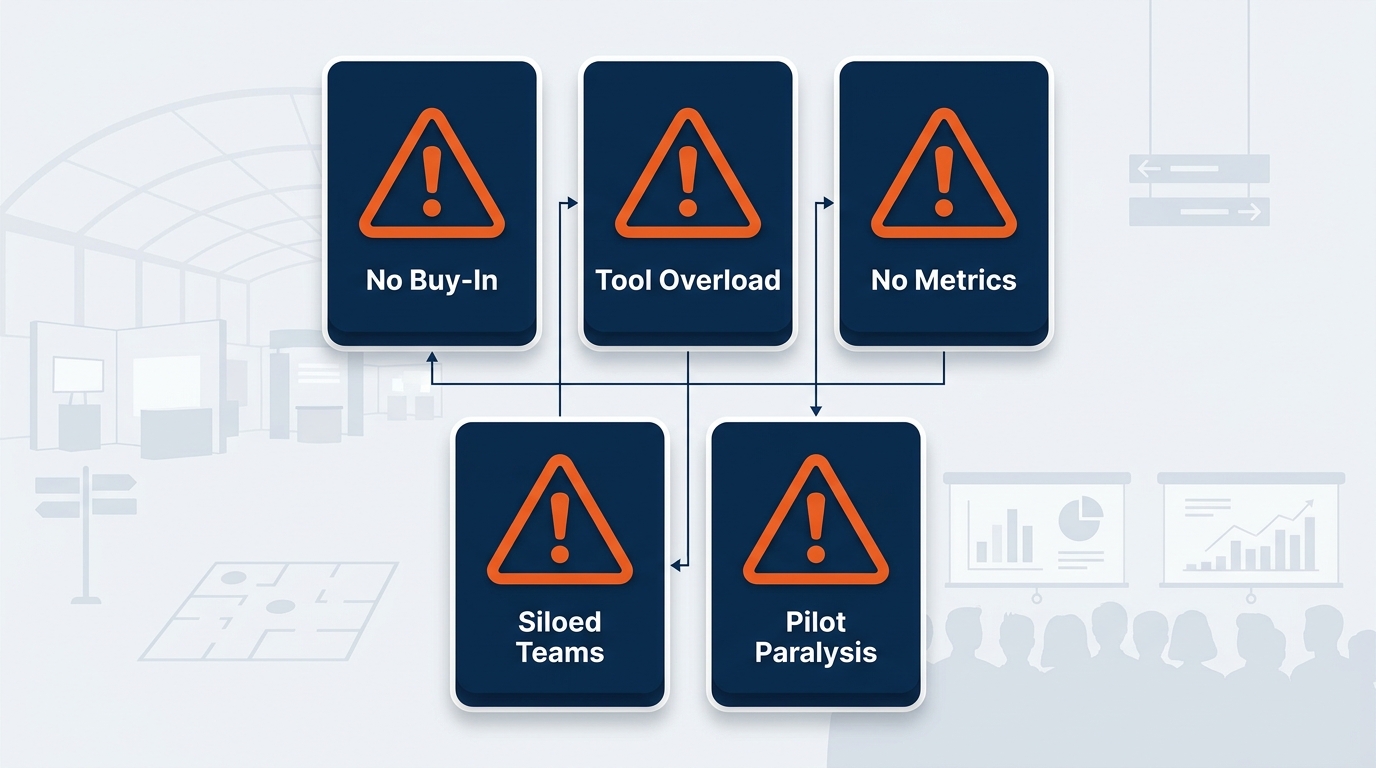
Figure 4:The five failure modes that consistently derail AI adoption at operationally intensive service organizations — each preventable with the right organizational design.
With the frameworks in place, let us name the specific failure modes that appear most consistently in AI adoption programs at large service organizations. These are not theoretical. They are drawn from the pattern across companies that invested significantly in AI tools and measured minimal returns.
Failure Mode 1: Tool-First, Workflow-Never The organization deploys the tool, runs a training webinar, and considers adoption complete. No one asks: “What specific workflows are we redesigning?” The tool becomes optional. The exhibitor service kit is still assembled the way it was in 2015. The ROI doesn’t materialize.
Failure Mode 2: Compliance Without Conviction Employees complete the mandatory training, achieve their certification, and never open the tool again. Because the training addressed Knowledge (ADKAR step 3) without ever building Awareness or Desire (steps 1 and 2). The training happened. The change did not.
Failure Mode 3: Champions Without Authority The organization appoints an “AI Champion” who is enthusiastic but has no team, no budget, no recognition, and no power to remove barriers — and who is also expected to run three shows that quarter. The champion burns out. The program fades. The lesson incorrectly drawn: “AI champions don’t work.” The correct lesson: champions without protected time and authority are ceremonial, not structural.
Failure Mode 4: Perfection as the Enemy of Progress Governance teams spend six months building a perfect AI policy before anyone is allowed to experiment. By the time the policy is approved, the technology has moved twice and the policy is already outdated. Meanwhile, competitors who started experimenting six months ago have six months of learning that we don’t have.
Failure Mode 5: Showcase Without Scale A brilliant Showcase Project is built — a Chicago ops team redesigns their move-in status reporting and saves six hours a show. It wins internal recognition. And then it lives on a SharePoint page that nobody visits, and the Toronto, London, and Dubai teams keep doing it the old way. Because the program never built a mechanism for taking individual innovations and turning them into facility or regional standards.
Failure Mode 5 is the one GES should worry about most. With 24 facilities across 75+ countries, we are structurally excellent at local problem-solving and structurally challenged at horizontal propagation. Every good idea in this company has to survive a geography test. If the mechanism for moving a workflow improvement from Las Vegas to Amsterdam does not exist, the improvement stays in Las Vegas.
1.55. Finding and Fueling the AI Champions
Every successful bottom-up AI adoption story has the same cast of characters at its center: a small group of enthusiastic early adopters who were empowered to experiment, recognized when they succeeded, and given a visible platform to share what they learned.
These are your AI Champions. And finding them is more important than almost any other organizational action in the early stages of an AI program.
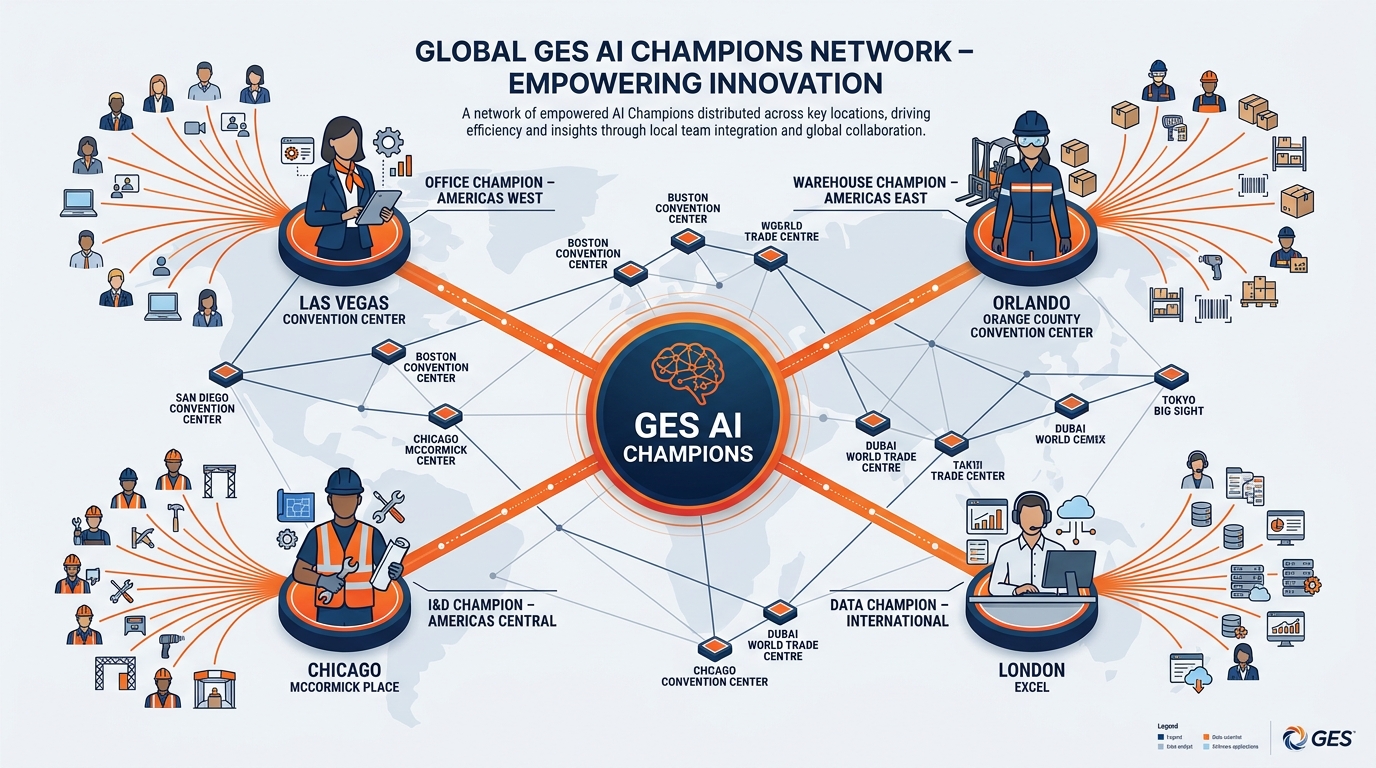
Figure 5:AI Champions are not the most technical people in the room. They are the most trusted — and the most willing to learn publicly.
A common mistake: organizations look for their most technical people to be AI Champions. This is almost always wrong. Technical sophistication is not the primary qualification. The qualities that make an effective AI Champion in the GES context are:
Credibility with peers. The Champion’s colleagues already respect their professional judgment — they are the person you want running your hardest move-in, or the designer whose concepts always survive client review. When they say, “I tried this and it changed how I work,” people listen, because they trust the source.
Genuine curiosity. Not enthusiasm manufactured for a role — but authentic interest in figuring out what is possible. You can hear it when you talk to them: they are asking questions, not just reporting answers.
Willingness to learn publicly. This is the rare quality. Most professionals are comfortable sharing successes. The Champion who says “I tried this on the freight manifest reconciliation, it produced garbage, here’s what I learned” — in front of their team, without embarrassment — is the one who makes it safe for everyone else to try. This is Trust in the T.R.U.E. values: honest about what worked and what didn’t.
A real workflow to test on. The best Champions are not experimenting in the abstract. They are applying AI to actual work — a real exhibitor service kit, a real labor forecast, a real organizer RFP response, a real post-show recap deck — and reporting back from the show floor.
1.5.1Champions Must Span the Whole Company, Not Just Corporate
This is where most AI programs at operations-heavy companies quietly fail. They recruit champions from marketing, finance, IT, and HR — people who sit at desks, in front of screens, in headquarters — and then wonder why adoption never reaches the field.
GES cannot afford that mistake. A large share of our workforce does not spend its day at a desk. Show operations managers, labor coordinators, I&D crew leads, warehouse and material handling teams, graphics production operators, on-site exhibitor services staff — these are the people delivering 4,000+ events a year, and they experience work through a phone, a radio, a clipboard, and a very short window between move-in and show open.
A viable GES champion network needs representation from at least six populations:
Table 2:Champion Coverage Map — Who Must Be Represented
Population | Typical Work Context | What an AI Win Looks Like For Them |
|---|---|---|
Show / Event Operations | Mobile, on-site, deadline-driven, multi-timezone | Daily move-in status update drafted automatically; exhibitor change-order summaries; faster escalation write-ups |
Creative & Design | Adobe/CAD heavy, Workfront-managed, concept-to-production | Design brief synthesis; client feedback consolidation; first-pass copy for concept decks |
Logistics, Freight & Warehouse | Advance warehouse, marshaling yard, customs, carnets | Freight manifest anomaly checks; carnet documentation drafting; material handling cost variance summaries |
Sales & Account Management | Organizer and agency relationships, RFPs, renewals | RFP response first drafts; QBR decks from show data; account history synthesis before a renewal call |
Corporate Functions | Finance, People & Culture, Legal, Marketing, IT | Policy drafting, contract review support, reporting, internal comms |
Tech Product Teams | onPeak, Visit by GES product and engineering | Already ahead — these are your teachers, not just your students |
If your champion list has five people and all five sit in an office, you do not have a champion network. You have a corporate pilot. Fix it before you launch.
1.5.2Reaching the People Who Don’t Sit at a Desk
Change management for a distributed, non-desk workforce is a different discipline. A few principles that hold up in practice:
Meet them in the rhythm of the show, not the rhythm of corporate. The pre-show call, the move-in morning huddle, the end-of-day ops sync, the post-show debrief. These already happen. A three-minute AI segment inside an existing meeting beats a 60-minute training nobody can attend during a build.
Mobile-first or it doesn’t exist. If the AI resource requires a laptop and a VPN, the floor crew will never see it. Copilot on a phone, a short video in Teams, a one-page PDF in the show folder — those travel.
One workflow, not a curriculum. A crew lead does not need an AI course. They need one thing: “Dictate your punch list into your phone and let Copilot turn it into the formatted dismantle report.” That is the whole intervention. It takes ninety seconds to demonstrate and it saves them an hour.
Translate, literally. We operate in 75+ countries. Change materials in English only will reach a fraction of the workforce. Copilot’s own translation capability makes multilingual rollout materially cheaper than it used to be — use it on your own change communications first. It’s a fitting proof of concept.
Respect the show calendar. Nobody is learning a new tool during move-in week for a 4,000-exhibitor show. Schedule adoption pushes into the shoulder periods. Change management that ignores operational seasonality is change management that gets ignored.
1.5.3The Bottom-Up Pattern — How It Actually Happens
The most instructive case studies in AI adoption are not the top-down strategic transformations. They are the grassroots ones — the ones that started with a single person who tried something, and spread.
ING — one of Europe’s most successful enterprise AI adopters — did not mandate AI adoption. They created communities of practice: informal groups where employees who were experimenting with AI could share what they were learning. No policy. No certification. Just structured sharing. Within 18 months, AI-assisted practices had spread to over 60% of their knowledge-worker population — driven almost entirely by peer-to-peer sharing.
Large distributed service organizations have repeatedly succeeded with a “floor captain” model: one identified AI enthusiast per site, per floor, or per crew, whose job is not to train colleagues but simply to be available, to demonstrate, and to celebrate when someone tried something and it worked. The floor captain model accelerates adoption faster than any centralized training program — and for GES it maps almost perfectly onto our existing structure. Every facility has one. Every large show team has one.
Sears — the 50-app story from Chapter 2 — was built on a similar pattern. The employees who built those applications were not following a mandate. They were solving problems they personally found frustrating, using tools they had been given access to, and showing their results to their colleagues. The organizational contribution was not the mandate. It was the access and the permission.
And closest to home: onPeak’s AI Smart Suite did not begin as a company-wide transformation program. It began with a team that had a specific, irritating, high-volume problem — categorizing inbound email, reading contracts, searching inventory — and the freedom to solve it.
At GES, the same pattern is available in every facility. The question is: who on your team — or in your warehouse, or on your show crew — has that Champion spark? And what does it cost to give them access, time, and permission?
Usually, the answer is: a lot less than you think.
1.66. The Four Archetypes of Resistance
Not everyone is a Champion. And that is not a problem — it is a reality that effective change management accounts for rather than ignores.
Across organizations at different stages of AI adoption, resistant professionals tend to cluster into four archetypes. Each archetype has a different underlying concern, and each requires a different response.
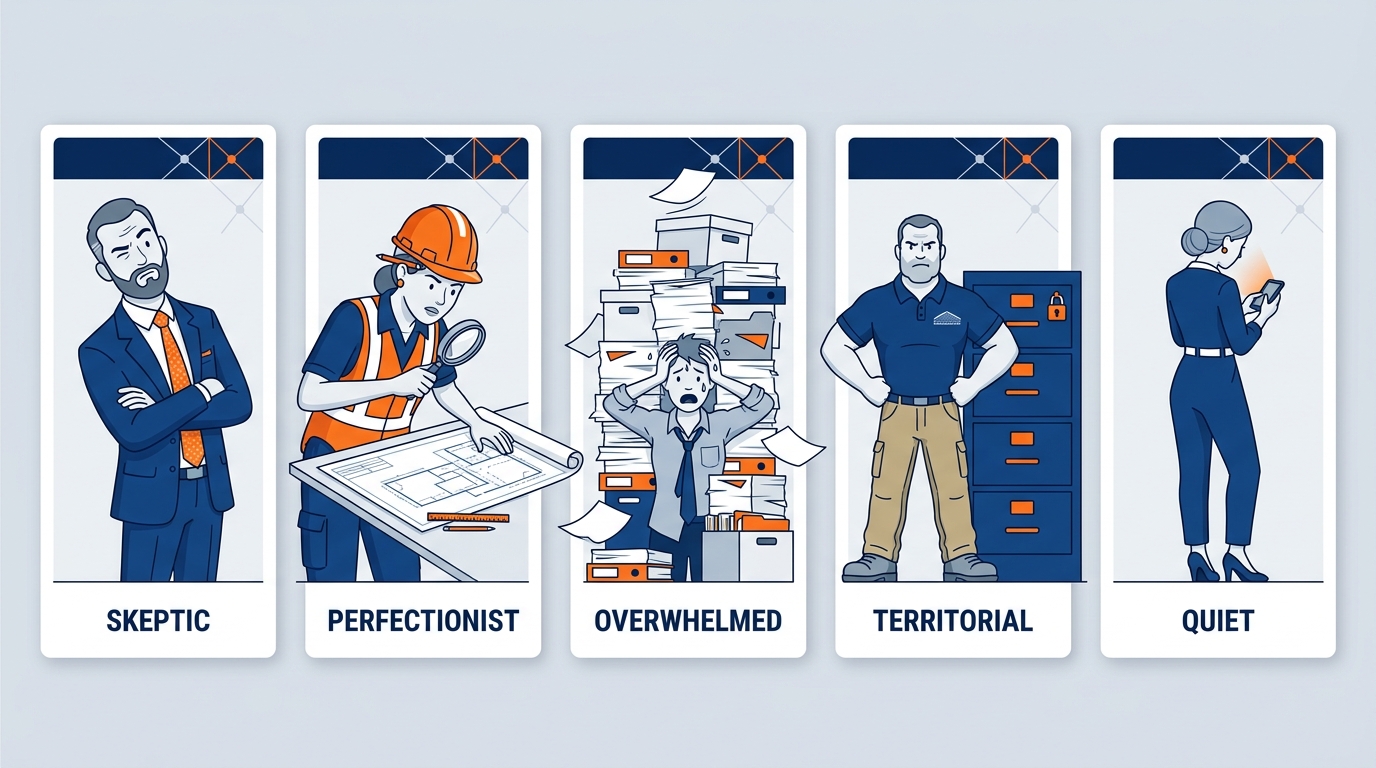
Figure 6:Resistance is not uniform. The right move depends on which archetype you’re dealing with. One response does not fit all four.
1.6.1The Cynic
What they say: “We tried something like this three years ago. There was a new system, a rollout, a bunch of training. Six months later we were back on spreadsheets. This is the same movie.”
What they actually mean: “I have been burned before and I don’t want to invest emotional energy in something that will be abandoned.”
The right move: Don’t argue with the cynicism — validate it. Organizations have hyped technology and abandoned it, and in a company that spent 55 years inside a larger corporate structure, plenty of initiatives arrived and departed without explanation. The Cynic’s skepticism is earned. What changes the Cynic is not more communication about strategy — it is a concrete, visible demonstration that this time is different. Show them a real workflow on a real show that actually changed. Show them the hours saved and the error avoided. Point at onPeak. Give them evidence, not enthusiasm. The Cynic becomes a convert when the proof arrives. And when they convert, they become among the most credible advocates — because everyone knows they were the hardest to convince.
1.6.2The Perfectionist
What they say: “I want to use it, but I need to make sure I’m doing it right. I’m not putting an AI-drafted document in front of an organizer and having it be wrong.”
What they actually mean: “My standards are high, and I’m afraid AI output will undermine them.”
The right move: The Perfectionist is not resistant — they are risk-averse in a way that is professionally appropriate when your name is on a client deliverable and a show opens whether you’re ready or not. Give them structure: the verification discipline, the review protocol, the clear rule that AI drafts and humans decide. Give them explicit permission to treat AI output as a first draft that they improve, not a finished product they endorse. This is Excellence and Responsibility in the T.R.U.E. values working together — AI raises the floor, the professional still owns the ceiling and the outcome. The Perfectionist, once they see that AI raises their quality floor rather than lowering their quality ceiling, often becomes an extremely disciplined and effective AI user.
1.6.3The Territorial Expert
What they say: (rarely out loud) “If AI can do what I do, I’m not needed anymore.”
What they actually mean: “My professional identity and my job security are connected to specific expertise — I’m the one who knows the union jurisdiction rules at that venue, I’m the one who knows how that organizer likes their floor plan, I’m the one who can price a complex drayage scenario — and this tool appears to be a direct threat to both.”
The right move: This is the identity layer from Chapter 2, manifesting at the individual level. The wrong move is to dismiss the concern as irrational. It isn’t. The right move is direct, honest acknowledgment: “What AI is replacing is the mechanical part of your expertise — the retyping, the lookup, the reformatting. What it cannot replace is the judgment, the client relationship, the venue-specific knowledge, and the ability to make a call at 6 a.m. on move-in day when the freight is late and the organizer is standing in front of you. Your value does not decrease when AI does the drafting. It increases — because now your judgment operates at a higher level with better inputs.”
Then prove it by giving them an AI tool that visibly amplifies their expertise rather than substituting for it. Better still: make them the person who captures their expertise into a shared knowledge base with AI’s help. The Territorial Expert who becomes the author of the venue playbook has not lost status — they have institutionalized it.
1.6.4The Overwhelmed
What they say: “I want to do this, I just don’t have time. I’ve got three shows back to back and then I’m in Dubai. Can we revisit after Q3?”
What they actually mean: “My capacity is genuinely at its limit and I need someone to make the on-ramp shorter.”
The right move: Reduce the barrier. Fifteen minutes, one use case, right now — not a training program. Not a certification. Not a self-directed learning module due in two weeks. Sit next to them, open Copilot, and apply it to something they are actually working on today: the show they are building this week, the deck due Friday. The Overwhelmed professional, once they experience the time savings themselves, becomes motivated to invest the learning time — because they have seen the return. The barrier is not willingness. It is the apparent size of the investment before the payoff.
The Overwhelmed archetype is the most common one at GES, and it is the least about resistance. These are your best people. They are not saying no. They are saying not like this.
1.77. Change Management for Copilot Cowork — A Different Kind of Change
Everything up to this point applies to AI you chat with. There is now a second category, and it requires its own change management approach.
Microsoft Copilot Cowork reached general availability on June 16, 2026. It runs on Anthropic models and it does something categorically different from Copilot Chat: it executes long-running, multi-step tasks end-to-end across Microsoft 365. You describe an outcome; it works through the steps across Word, Excel, PowerPoint, Outlook, Teams, and SharePoint, and comes back with the result. It is billed on a usage-based model, metered in Copilot Credits, rather than as a flat per-seat license.
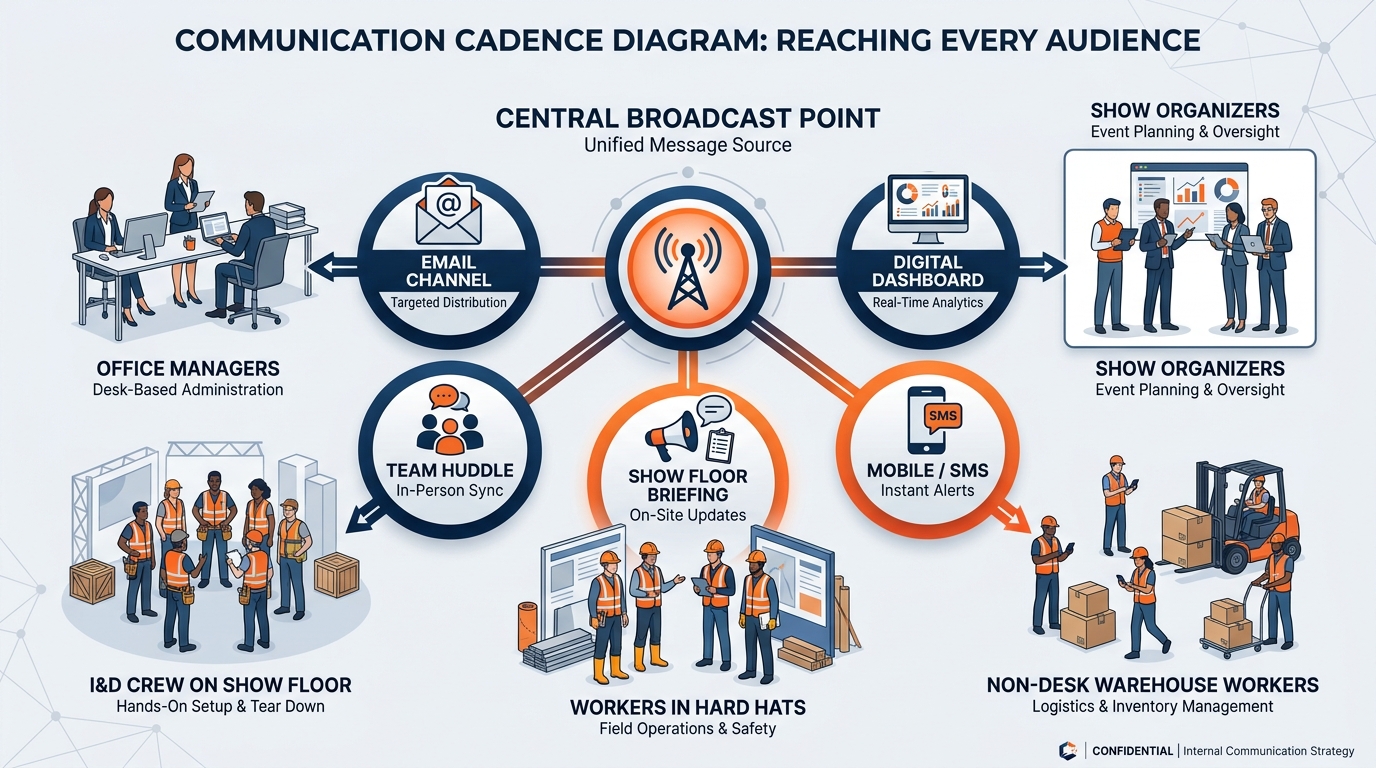
Figure 7:Effective AI change communication flows from executive leadership through managers and champions to every employee — on the show floor, in the warehouse, and at the desk — with feedback loops built in at every level.
Why does this deserve its own section in a change management chapter? Because the behavioral shift is much larger than the one Copilot Chat required, and three specific things break if you roll it out the same way.
1.7.1Shift 1: From Asking to Delegating
Copilot Chat is a conversation. You ask, it answers, you keep control of every step. Cowork is a delegation. You hand over an outcome and step away.
That is a genuinely different professional muscle, and most people have never built it in a software context. The closest human analogue is handing a task to a capable new colleague: you have to specify the outcome clearly, provide the right context up front, agree on what “done” looks like, and then review the result properly rather than skimming it.
Delegation is a management skill. Cowork asks individual contributors to use it, often for the first time.
The change management implication: teach delegation, not prompting. The training for Cowork is not a prompt library. It is a briefing discipline. If your team already knows how to write a clear scope of work for a subcontractor, they already have the skill — they just need to see that it transfers.
1.7.2Shift 2: New Review and Approval Norms
When a person does the work, we know how to review it. We have established norms: a designer’s concept goes through creative review; an ops manager’s reconciliation gets a second set of eyes; a proposal goes to the account lead before it goes to the organizer.
When Cowork does multi-step work autonomously, those norms need to be restated explicitly — because the work arrives looking finished. Polished output creates a false sense of completion. A well-formatted deck feels reviewed even when nobody has reviewed it.
Teams need answers to questions they have never had to ask before:
Who reviews Cowork output before it reaches an exhibitor, an organizer, or an agency partner?
Does an internal artifact need the same review as an external one? (No — but say so explicitly, or people will either over-review everything or under-review everything.)
How do we mark a document as AI-executed so a reviewer knows what to check?
What is the standard for verifying the inputs Cowork used, not just the output it produced?
Where does accountability sit? (Always with the human who delegated. Always. Responsibility in T.R.U.E. is non-transferable — a tool cannot own an outcome.)
1.7.3Shift 3: Usage-Based Billing Requires Real Governance
This is the shift most organizations underestimate, and it is a genuine change management problem rather than a finance problem.
For years, enterprise software has been per-seat and predictable. You buy 500 licenses, you pay for 500 licenses, and nobody thinks about cost at the moment of use. Cowork’s Copilot Credits model breaks that pattern: consumption varies by how much work you delegate and how large those tasks are.
Two failure modes follow, and they are opposites:
Failure Mode A — Fear of the Meter. People find out usage costs money and stop using it. Adoption dies quietly, and nobody escalates because nobody wants to be the person who ran up the bill. This is by far the more common outcome, and it is the more expensive one — you paid for capability you never used.
Failure Mode B — Uncontrolled Burn. No guardrails, no visibility, no ownership. Consumption spikes in one region, finance reacts, and the program gets suspended mid-flight — which then produces Failure Mode A permanently, plus a new generation of Cynics.
The way through is explicit budget guardrails communicated before rollout, not after the first invoice:
Table 3:Cowork Governance — Guardrails That Enable Rather Than Freeze
Guardrail | What It Looks Like in Practice | Why It Matters for Adoption |
|---|---|---|
Named budget owner per function | Show ops, creative, logistics, sales, and corporate each have one person accountable for their credit pool | Removes ambiguity. Nobody has to guess whether they’re allowed to spend. |
A stated monthly allowance per user or team | “Your team has X credits this month. Use them. If you run out doing real work, tell us — that’s a good signal, not a violation.” | Directly neutralizes fear of the meter. Permission is explicit. |
Visible consumption reporting | Monthly credit usage shared with team leads, not hidden in a finance system | People self-regulate when they can see. They panic when they can’t. |
A short list of high-value use cases | Post-show reconciliation, RFP first drafts, multi-show reporting, exhibitor kit generation | Directs spend toward tasks with obvious payback instead of novelty use |
A “when not to use Cowork” list | Simple one-shot questions, quick rewrites, anything Copilot Chat handles in ten seconds | Prevents burning multi-step credits on single-step work |
A no-blame escalation path | “If you think a task is worth the spend and you’re near your limit, ask. Nobody gets in trouble for asking.” | Keeps the highest-value work from being self-censored |
1.7.4Sequencing Cowork Behind Chat
One last piece of practical sequencing: do not lead with Cowork.
Copilot Chat is the on-ramp. It is low-stakes, immediately useful, conversational, and forgiving. It builds the fundamental habit of turning to AI at the moment of work. Cowork is the second-story addition, and it lands well only on people who have already built that habit and developed some judgment about where AI is reliable and where it isn’t.
A reasonable GES sequence looks like this:
Months 1–3: Copilot Chat across all populations. Build the habit. Establish verification discipline. Identify Champions.
Months 4–5: Cowork pilot with Champions only — 8–12 people across show ops, creative, logistics, sales, and corporate. Real workflows, tracked outcomes, tracked credit consumption. Build the review norms from what actually happens, not from theory.
Month 6+: Expand Cowork to teams whose workflows the pilot proved out, with the governance guardrails and the review standard already written and socialized.
Skipping the pilot and rolling Cowork to everyone at once is how you get both failure modes simultaneously.
1.88. Communication Patterns That Build Trust
The way leaders talk about AI inside GES matters enormously — more than most leaders realize. The wrong communication pattern creates fear, breeds cynicism, and makes the resistance archetypes entrench further. The right pattern builds the psychological safety that allows people to experiment, fail, learn, and grow.
Here are the communication patterns that work — and the ones that undermine what they intend:
Table 4:AI Communication — What Works vs. What Backfires
What You Might Say | What People Hear | What to Say Instead |
|---|---|---|
“AI is a strategic priority for GES.” | “This is mandatory and you’d better comply.” | “AI is a professional development opportunity I want to personally support — and I’m learning it alongside you.” |
“We need to stay ahead of the curve.” | “We’re behind and I’m worried.” | “We’re independent for the first time in 55 years. We get to decide how this company works. Let’s use that.” |
“This will make everyone more efficient.” | “We’re going to do more with fewer people.” | “This takes the retyping, the reformatting, and the late-night reconciliation off your plate so you can focus on the work that actually requires your judgment.” |
“I expect everyone to complete the AI training.” | “Check the box. Move on.” | “I’m doing the training too. Here’s what I learned this week. What did you learn?” |
“Our competitors are using AI.” | “We’re reacting to fear.” | “The professionals who build AI habits now will have advantages that compound across every show they run for years.” |
(Silence after a failed AI experiment) | “Trying and failing is not safe here.” | “Tell me what happened. What would you try differently? Good experiment.” |
“Cowork is available to everyone starting Monday.” | “Another tool. Another thing to learn during show season.” | “Cowork handles the long, multi-step jobs — reconciliation, RFP drafts, multi-show reporting. Here’s your budget, here’s who to ask, here’s one task to try it on.” |
“Corporate is rolling out an AI program.” | “This isn’t for people like me.” | “This is for the show floor as much as the office. Here’s the one thing it does for a crew lead.” |
The most powerful communication pattern of all is the one that is hardest for most leaders: public modeling. Talking about your own AI experiments — what worked, what didn’t, what surprised you — in team meetings, in one-on-ones, on the pre-show call, in informal conversations. Not as a performance of innovation, but as a genuine sharing of a professional learning process.
This is where senior visibility does disproportionate work. When Derek P. Linde frames AI as part of what independence makes possible; when Jeff Stelmach connects it to how GES Exhibitions delivers on the show floor; when Lisa Baez points to what onPeak already shipped; when Jenna Trosper makes clear that People & Culture sees this as capability-building rather than headcount math; when Wendy Gibson models it in how marketing actually works; when Tony Petrucci shows the creative and design organization where AI belongs in the concept-to-production pipeline and where it emphatically does not — the message stops being a corporate memo and starts being a set of examples people can copy.
Employees do not adopt what leaders announce. They adopt what leaders visibly do.
When leaders model publicly, they create permission. Permission for their team to try things that might not work. Permission to talk about AI as a real, evolving practice rather than a polished deliverable. Permission to be in the Neutral Zone together, figuring it out collectively.
That permission is worth more than any training program you can buy.
1.99. The 100-Day Playbook
Every successful AI adoption program needs a structured beginning. Not because structure is more important than culture — but because structure creates the conditions in which culture can form. Without a defined sequence, adoption dissolves into the urgency of daily operations — and at GES, daily operations are extremely urgent, roughly 4,000 times a year.
Here is the 100-day playbook, adapted for a globally distributed, show-driven organization:
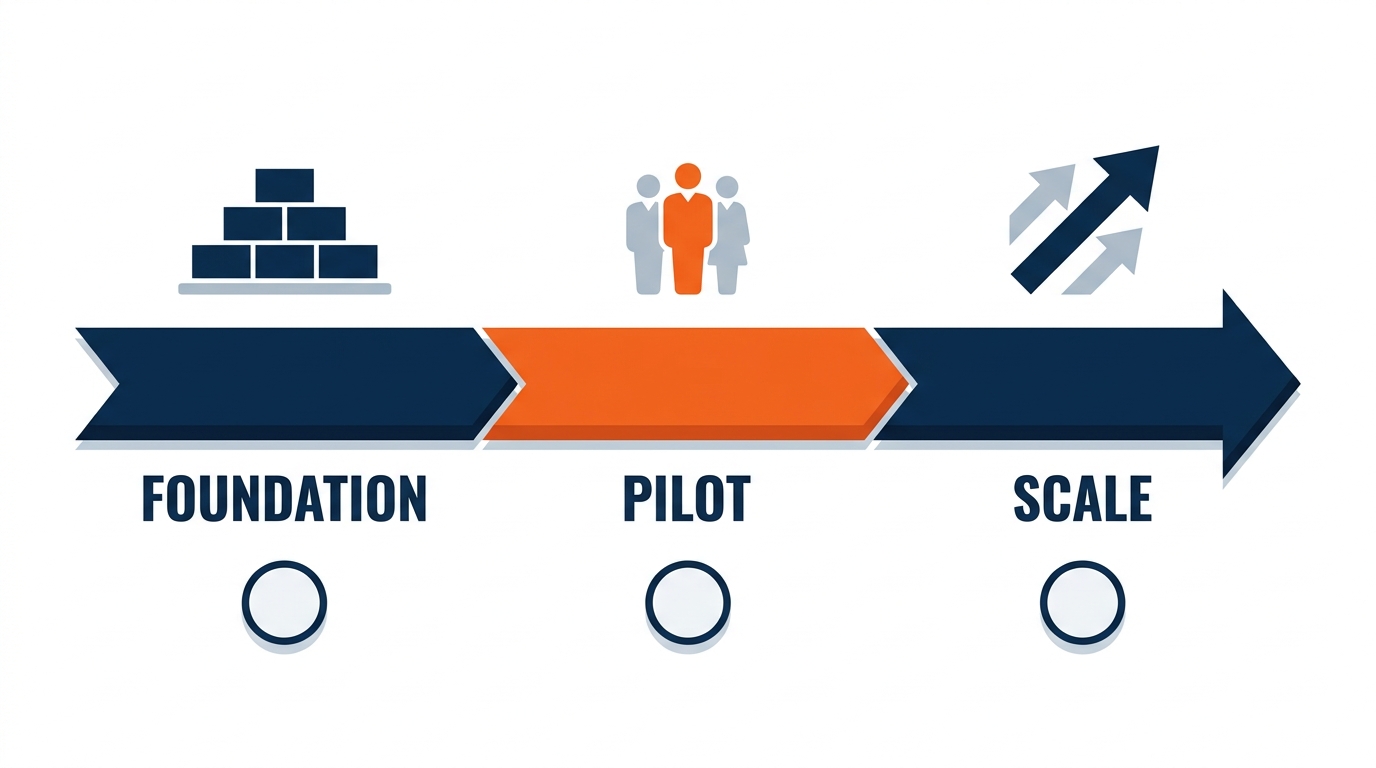
Figure 8:The 100-day playbook. Three phases, one goal: transform AI from a topic people talk about into a practice people live.
1.9.1Days 1–30: Awareness — Ignite the Curiosity
The goal of the first 30 days is not adoption. It is curiosity. You want people asking questions, not completing checkboxes.
Week 1: Leader communication — personal, specific, and modeling-focused. Not a strategy announcement — a genuine “I tried this and here’s what I found” message from the most credible voice available in your part of the business. Tie it to independence: we control our own roadmap now.
Week 2: Identify Champions. Three to five volunteers across different functions and seniority levels — and make sure at least two of them do not sit at a desk. Give them access, protected time, and a clear mandate: experiment and share.
Week 3: First “AI Lab” session — informal, one hour, hybrid so remote and on-site people can join, recorded for the crews who are mid-build. Champions demonstrate something real. No slides, no certification. Just: “Here’s what I tried on last week’s show. Here’s what happened. Here’s what you can try today.”
Week 4: Open channel — a Teams channel, a Viva Engage group, a SharePoint page — where people can share AI experiments, tips, and questions. Seed it with Champion contributions. Make sharing feel low-stakes. Make sure it is reachable on a phone, because half your audience will only ever see it on a phone.
1.9.2Days 31–60: Pilots — Prove Real Value
The goal of the second 30 days is evidence. Specific, measurable, visible results that make the case from the inside better than any external report.
Week 5–6: Champions each identify one repeatable workflow in their area and redesign it with AI assistance. Not a demo — a real workflow the team actually uses on a real show. Good candidates: exhibitor service kit assembly, daily move-in status reporting, labor forecast-to-actuals variance narrative, organizer RFP response first draft, post-show recap deck, site survey notes to venue knowledge base.
Week 7: First internal “what’s working” session. Champions present: “We changed how we do X. Here is what it looked like before. Here is what it looks like now. Here is the time saved / errors avoided / quality improved.” Numbers matter here — hours, error rates, turnaround times.
Week 8: Expand access, and open the Cowork pilot with your Champion group if Chat habits are established. Set the credit budget and the review norms before anyone starts, not after.
1.9.3Days 61–100: Scale — Spread What Works
The goal of the final 40 days is institutionalization. Making the AI-assisted workflow the default, not the exception — and, critically for GES, making it travel across facilities.
Week 9–10: Document the redesigned workflows as standard operating procedures. Put them where show teams actually look: the show ops manual, the facility SharePoint, the crew lead checklist, the onboarding path. Make AI-assisted practice the baseline expectation for new hires.
Week 11–12: First Showcase event — internal, celebrated, visible, and cross-facility. Invite Las Vegas, Chicago, Toronto, London, Amsterdam, and Dubai. This is your direct countermeasure to Failure Mode 5. A workflow improvement that only one facility knows about is a rounding error; the same improvement adopted across 24 facilities is a company-level result.
Week 13–14: Review what the 100 days revealed. What worked? What stalled? Who surprised you? What did the Cowork pilot teach you about budget, review norms, and where delegation genuinely pays? What should the next 100 days look like?
The playbook is a beginning, not a destination. Its job is to build enough momentum that the change starts sustaining itself — that AI practice becomes the norm from which deviation requires justification, rather than the experiment that needs permission.
1.1010. Governance vs. Permission — Finding the Line Between Protection and Paralysis
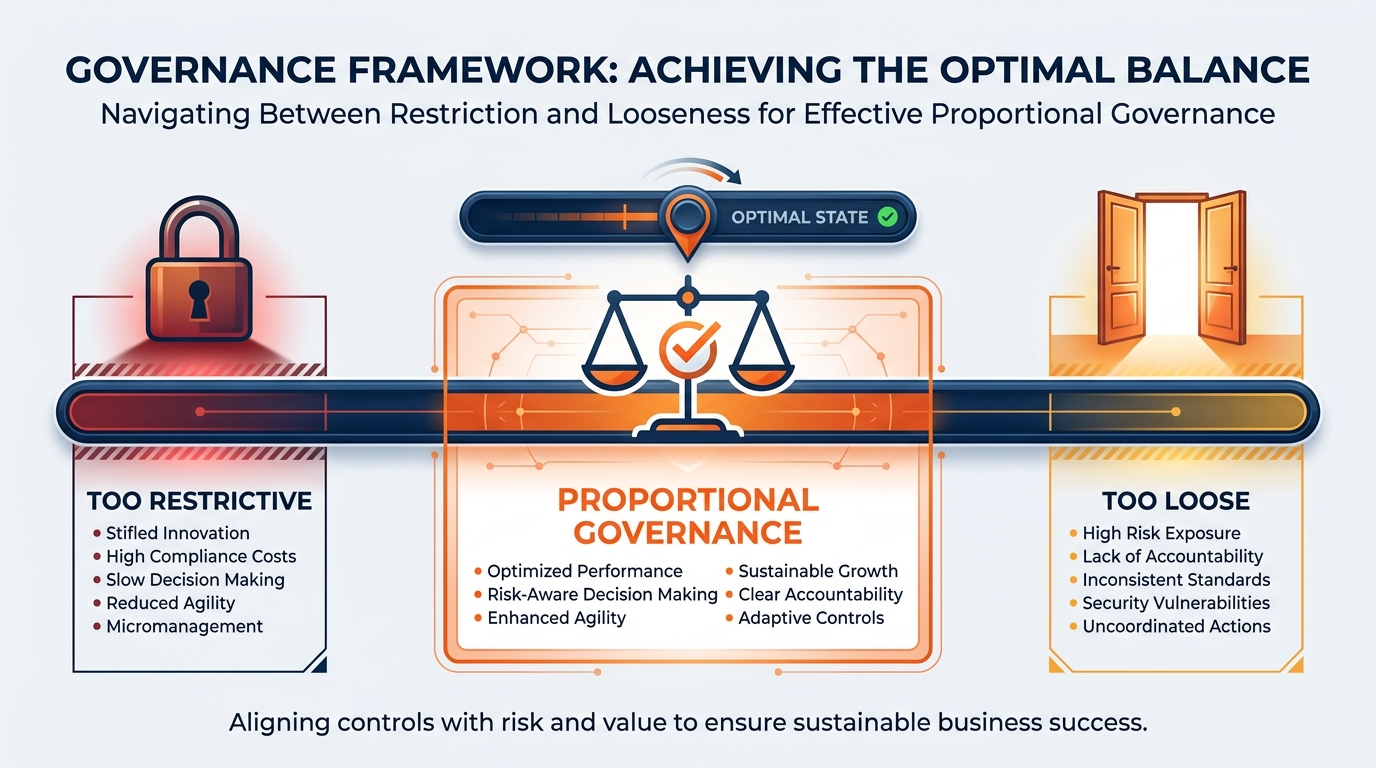
Figure 9:The governance spectrum: over-restriction kills adoption just as surely as reckless deployment kills trust. The right line is governed innovation.
This is the hardest conversation in every AI adoption program, and it is worth having directly.
GES carries real obligations. We handle attendee and exhibitor personal data across jurisdictions with meaningfully different privacy regimes — GDPR in Europe, a patchwork across the Americas and Asia-Pacific. We operate under union labor agreements where jurisdiction and work rules are contractual, not advisory. We move goods internationally under carnets and customs regimes where documentation errors have financial and legal consequences. We work under venue safety and OSHA-equivalent requirements where a shortcut can hurt someone. We sign organizer and agency contracts with confidentiality obligations. We publish ESG and emissions data that has to be defensible.
That weight is real. The people who carry it are doing important work.
And here is the tension: the same caution that protects the company from risk can, if miscalibrated, protect the company out of its competitive position.
The question is not whether to govern AI use. Governance is non-negotiable. The question is: what kind of governance, applied where, at what stage?
Table 5:Governance That Enables vs. Governance That Paralyzes
Governance That Enables | Governance That Paralyzes |
|---|---|
“Here is what you are permitted to do. Start there.” | “You must get approval before you do anything.” |
“Here is the approved use case library. Add to it.” | “AI use requires a formal risk assessment per workflow.” |
“Here is what not to put in AI — attendee PII, unredacted contracts, union negotiation material. Everything else is fair game.” | “AI use is under review pending policy development.” |
Fast lane for low-risk experiments, scrutiny for high-risk ones | One governance process for all AI use regardless of risk |
Policies that evolve with the technology | Policies finalized before the technology is understood |
“Go. Here are the guardrails.” | “Wait. Here is the approval process.” |
Cowork credit budgets set in advance, with a path to ask for more | Cowork access frozen until someone can predict annual consumption exactly |
The principle is proportionality: governance intensity should match risk level. Using Copilot to draft talking points for an internal ops huddle is a completely different risk profile from using AI to generate customs documentation, interpret a union agreement, or produce a client-facing emissions report. Treat them differently. Reserve the full review apparatus for the workflows where it genuinely matters, and create a fast lane for the vast majority of daily AI use that is inherently low-risk.
A workable proportionality tier for GES:
Table 6:Proportional Governance Tiers — A Starting Model
Tier | Example Work | Governance Posture |
|---|---|---|
Green — Go | Internal emails, meeting summaries, first-draft ops notes, brainstorming, formatting, translation of internal material, learning and practice | No pre-approval. Standard verification discipline applies. Use it freely. |
Amber — Go, then review | Exhibitor-facing kits and instructions, organizer decks, RFP drafts, post-show reports, internal reporting with real numbers | Named human reviewer before it leaves GES. Sources traced, figures spot-checked. |
Red — Specialist involvement required | Attendee PII, customs and carnet documentation, union agreement interpretation, executed contracts, safety-critical instructions, published ESG data, anything with legal exposure | Legal, compliance, or the relevant subject-matter owner in the loop by design. AI may assist; it does not decide. |
The tiers matter more than their exact contents. What kills adoption is ambiguity — when a person on a show team genuinely does not know whether using Copilot on the document in front of them is encouraged or career-limiting. In the absence of clarity, most professionals choose inaction. Publishing even an imperfect tier model beats publishing nothing, because it converts anxiety into a decision people can make in five seconds.
The goal is: go with guardrails, not wait with approval.
1.1111. Map Your Team’s AI Readiness
Here is the tool that makes everything in this chapter actionable at the individual leader level.
The AI Readiness 2×2 maps your team members across two dimensions: their current AI skill level (from low to high) and their willingness to change (from low to high). The four quadrants that result require four different leadership moves.
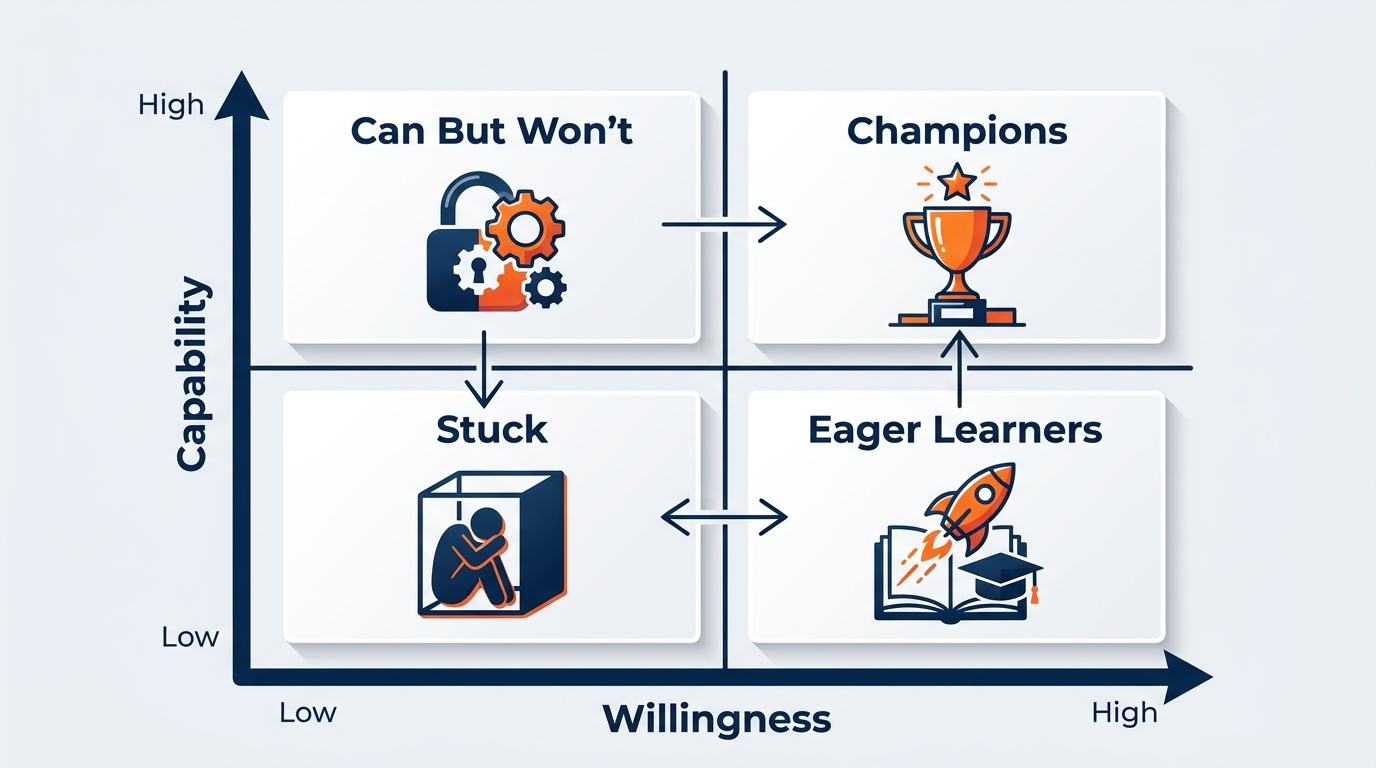
Figure 10:Every person on your team fits somewhere in this matrix. Each quadrant requires a different leadership move. The same intervention applied uniformly to all four will fail for three of them.
Table 7:The AI Readiness 2×2 — Leadership Moves by Quadrant
Quadrant | Who They Are | What They Need | Your Move |
|---|---|---|---|
Champions (High skill, High willingness) | Your early adopters — already experimenting, already building their own trackers and shortcuts | Visibility, authority, protected time, a platform to share | Appoint them. Give them time and recognition. Let them run the AI Lab sessions and the Cowork pilot. |
Eager Learners (Low skill, High willingness) | Enthusiastic but untrained — asking questions, showing up to everything | Structured access, quick wins, a clear starting point | Give them Chapter 1 of this book. Sit beside them for 30 minutes on a live show document. Remove the blank-page barrier. |
Coachable Stars (High skill, Low willingness) | Technically capable but emotionally resistant — often the Territorial Expert archetype | Psychological safety, acknowledgment of loss, visible proof | One-on-one conversation. Acknowledge what they’re protecting. Show how AI amplifies it — and offer them the job of codifying their expertise. |
Skeptics (Low skill, Low willingness) | Haven’t started and don’t want to — often the Cynic or Overwhelmed archetypes | Evidence, not training. A win they can see, not a process they have to follow. | Don’t start with them. Start with Champions. Let their results create pull. |
The strategic insight in this matrix: do not start with the Skeptics. It is a natural impulse — the resistant are visible, and organizational culture is sometimes held hostage by them. But starting with skeptics is fighting uphill. Start with your Champions and Eager Learners. Build real results on real shows. Make those results visible across facilities. The Skeptics will move when they see evidence — and some will not move until they see their colleagues succeeding without them, which creates the only motivation that actually works for the deeply resistant: social proof combined with mild competitive pressure.
1.12🧪 Try This — Build Your Team’s AI Change Map
These exercises are practical change management tools you can use immediately. They work whether you are a facility GM, a show operations manager, a design lead, an account director, or a senior individual contributor who cares about your team’s trajectory.
1.1312. The AI Readiness Questionnaire — Your Culture Diagnostic Tool
Everything in this chapter — the frameworks, the archetypes, the 100-day playbook — works only if you have an honest picture of where your team actually stands today. Not where you hope they are. Not the official narrative. The real picture.
That is what this diagnostic tool gives you.
The AI Readiness and Integration Questionnaire is a 15-question instrument designed to surface three things simultaneously: where each individual sits on the AI maturity spectrum, how the team perceives the organization’s AI capability, and where the highest-value AI automation opportunities are hiding inside your day-to-day work.
→ Take the AI Readiness and Integration Questionnaire
1.13.1Understanding the Five Dimensions the Questionnaire Measures
The 15 questions are not random. They are organized around five diagnostic dimensions, each revealing a different layer of readiness.
Dimension 1 — Personal AI Sovereignty (Questions 3, 4, 5)
Where are you on the AI maturity scale?
These questions assess your personal relationship with AI — not your organization’s, yours. This matters because organizational AI adoption is always, at its foundation, the aggregate of individual journeys. You cannot build an AI-capable culture from people who have never personally experienced AI doing something useful.
The AI maturity scale for individuals runs from five recognizable stages:
Table 8:Personal AI Maturity Scale
Level | Stage | What It Looks Like | Score Range |
|---|---|---|---|
1 | AI Unaware | Has not meaningfully engaged with AI tools. May have heard of ChatGPT but hasn’t used it for real work. | 1–2 |
2 | AI Curious | Has experimented — tried a few prompts, played with a chatbot, seen a demo. But nothing has changed how they work. | 3–4 |
3 | AI Functional | Uses AI tools weekly for specific, repeated tasks — cleaning up an exhibitor email, summarizing a long thread. Has found at least one thing AI does reliably well. Getting value, but still dependent on the AI’s defaults. | 5–6 |
4 | AI Integrated | AI is embedded in daily workflow. Prompts intentionally. Has developed personal prompt libraries, personas, and workflows for their shows and accounts. Would feel meaningfully slower without it. | 7–8 |
5 | AI Sovereign | Designs AI solutions. Delegates multi-step work to Cowork with confidence. Builds agents, automations, and custom workflows. Thinks in systems, not just tasks. Could teach this to others. | 9–10 |
Most professionals at GES will score between a 3 and a 6 — functionally aware, selectively capable, but not yet integrated. That is not a failure. It is the starting point. The gap between a 5 and an 8 is not talent — it is deliberate practice, structured exposure, and a permission environment that says it is safe to experiment.
Question 4 — What’s the most impressive thing you’ve done with AI that actually stuck in your workflow? — is the most revealing question in the instrument. An honest answer reveals whether someone has crossed the threshold from curiosity to functional use. If someone cannot answer it, their score is probably a 3 or below, regardless of what they selected in question 3.
Question 5 — What’s been your biggest barrier? — tells you what is between your team and their next level. Not enough time (the dominant answer during show season), not knowing where to start, distrust of outputs, unclear permission — each answer requires a different intervention. This is where your Champions become critical: peer-to-peer credibility removes barriers that no training deck can touch.
Dimension 2 — Organizational AI Perception (Questions 6, 7, 8)
How does your team see GES’s AI readiness?
These three questions reveal something leaders often do not know: the gap between the official AI narrative and the experienced reality. An organization can have a formal AI strategy and still have a workforce that experiences the environment as ad hoc and unsupported. That gap is a trust problem, and it is a change management problem before it is a technology problem.
Question 6 asks what percentage of the team is genuinely AI-capable. The responses here reveal something important: how visible AI adoption is to peers. If Champions are working in isolation — getting results but not sharing them — their colleagues will underestimate the actual capability level of the team. At GES this effect is amplified by geography: a team in Amsterdam may have no idea what a team in Las Vegas has built.
Question 7 assesses whether people experience the organization’s AI strategy as real or rhetorical. The difference between “we’re exploring” and “we have a formal strategy with KPIs” is not semantics — it is the difference between employees feeling that AI initiatives have institutional backing or that they are on their own. The onPeak AI Smart Suite is genuine evidence of the former; the question is whether people outside that group know it exists.
Question 8 — the Bus Factor question — is the most uncomfortable one in the instrument. If your top three people left tomorrow, what would break first? At GES the honest answers tend to be specific and alarming: “Nobody else knows how that venue’s union jurisdiction actually works.” “Only one person can price a complex drayage scenario for that show.” “The whole client history for that organizer lives in one person’s inbox.”
This question surfaces something AI cannot fix by itself: the organizational fragility of undocumented expertise built up over 86 years. But it is also the clearest indicator of where AI-powered documentation, knowledge capture, and process codification would create the most immediate institutional value. If the answer is “almost everything would break,” you have just identified your first AI pilot — and probably your best one.
Dimension 3 — Role Context (Question 9)
What is your role?
Inside GES, the relevant variable is not industry — it is function and work context. A show operations manager, an exhibit designer, a warehouse lead, an exhibition sales director, and a People & Culture business partner all work at GES, but they have radically different AI use cases, different risk tolerances for AI outputs, different device realities, and different workflows where AI can create value.
Segmenting responses by role allows targeted analysis: where are the show operations teams experiencing friction? What are logistics and material handling teams identifying as their biggest bottlenecks? What do creative and design teams need that is different from what sales needs? Role-based patterns produce role-specific pilot candidates — and they prevent the single most common rollout error, which is designing the whole program for the population that happens to sit closest to headquarters.
Dimension 4 — Pain Points Addressable by AI (Question 10)
What workflows are high-volume, error-prone, or expertise-dependent?
This is the question that separates diagnostic surveys from actionable intelligence. Question 10 asks people to describe 2-3 critical business workflows that are either high-volume, error-prone, or require expensive expertise to execute — specifically those with the most manual handoffs or where errors cost the most.
At GES, expect clusters around: exhibitor service kit preparation and exhibitor communications; freight and material handling documentation; labor forecasting and post-show reconciliation; RFP and proposal production; design intake and client feedback consolidation; and cross-timezone handoffs between pre-show planning teams and on-site crews.
The responses to this question are, in effect, a crowdsourced AI opportunity map. When multiple people from different roles and different facilities identify the same workflow as painful, that convergence is your highest-confidence pilot candidate — and it is also your best scale candidate, because a fix that matters in three facilities probably matters in twenty-four.
Dimension 5 — AI Automation Opportunities (Questions 11, 12)
Where would AI create the most value if it worked perfectly?
Questions 11 and 12 access something that structured workflow analysis often misses: employee aspiration and pain. Question 11 — If you could wave a magic wand and have AI handle one thing perfectly starting tomorrow, what would it be? — reveals where people are most frustrated with their current cognitive load. The “magic wand” framing removes pragmatic filters and gets to the honest answer.
Question 12 asks for the single biggest bottleneck or process failure, with an estimate of cost or time lost. This question produces the data you need to build a business case. When employees themselves are estimating the cost of a broken process — “we lose two days per show reconciling labor” — the ROI conversation becomes grounded in lived experience rather than consultant projections. It is also exactly the input you need to decide where Cowork credits are worth spending.
Together, questions 11 and 12 give you the data to answer the three questions every AI implementation requires: Where does AI create the most value? What does success look like? How do we measure it?
1.13.2Conducting a Thematic Analysis — Turning Responses Into a Culture Change Roadmap
The questionnaire is most powerful when aggregated. Here is how to run a basic thematic analysis that turns 15-30 individual responses into an organizational action plan.
The goal of this exercise is not a perfect analysis. It is a shared, evidence-based starting point. When a team of 20 people has collectively named their pain points, their aspirations, and their capability gaps — and those responses are reflected back to them as a group — something important happens culturally: people feel heard, and the AI initiative stops feeling like something being done to them. It starts feeling like something they helped design.
That shift — from AI as imposition to AI as response — is the foundation of sustainable culture change. It is also, not incidentally, Understanding in the T.R.U.E. values expressed as an operating practice rather than a poster.
1.14Chapter Summary
Change management is not the soft side of AI adoption. It is the whole game.
The technology works. The people are capable. The question — always the question — is whether the organizational conditions exist for individual action to become collective behavior. Whether the Champions have platforms and protected time. Whether the permission is real. Whether the governance enables rather than paralyzes. Whether the message reaches the marshaling yard and not just the meeting room. Whether the leaders are modeling rather than mandating.
GES has something most organizations never get: a genuine inflection point. On December 31, 2024, after 55 years as part of someone else’s portfolio, this company became responsible for its own future. That does not happen twice. The window in which an organization is genuinely open to rebuilding how it works is measured in a small number of years, and we are inside it right now.
We also have something else most organizations never get: 86 years of accumulated operational excellence, and a value system — Trust, Responsibility, Understanding, Excellence — that maps almost perfectly onto what responsible AI adoption requires. Trust: use the tool, and verify the output honestly. Responsibility: the human who delegates owns the result, always. Understanding: people come first, including the people who are anxious about this. Excellence: AI raises the floor; our people raise the ceiling.
That culture is not an obstacle to AI adoption. It is the raw material that makes AI adoption sustainable — because when professionals with GES standards apply AI to their work, they do not lower their standards to match the AI’s output. They raise the AI’s output to match their standards.
The frameworks in this chapter — Kotter, ADKAR, Bridges — are not the answer. They are the map. You are the navigator. And the destination is a GES where AI-empowered professionals are the standard, not the exception — in Las Vegas and in Amsterdam, in the design studio and in the advance warehouse, at the desk and on the show floor.
The 100 days starts whenever you decide it starts.
AI Champion A credible, curious, and publicly-learning professional who models AI adoption within their team, show crew, or facility — making it safe for others to experiment by sharing both successes and failures.
ADKAR A change management model (Prosci) describing the five individual conditions required for sustainable behavior change: Awareness, Desire, Knowledge, Ability, Reinforcement.
Kotter’s 8-Step Model A framework for organizational transformation identifying eight sequential conditions required for change to take hold — from creating urgency to institutionalizing the new behavior.
Bridges’ Transitions Model A change model distinguishing between external change (events) and internal transition (the psychological journey) — comprising three phases: Endings, the Neutral Zone, and New Beginnings.
AI Readiness 2×2 A team diagnostic tool mapping individuals on two axes (AI skill level and willingness to change) to identify Champions, Eager Learners, Coachable Stars, and Skeptics — each requiring different leadership responses.
Permission Gap The organizational condition in which employees want to engage with AI but have not received clear, explicit permission to experiment, fail, and learn in that domain.
Proportional Governance The principle that AI governance intensity should match the risk level of the specific use case — applying full review rigor to high-risk workflows (attendee PII, customs and carnet documentation, union agreement interpretation, published ESG data) while providing a fast lane for inherently low-risk AI use.
Floor Captain Model An AI adoption approach in which identified enthusiasts are available within each facility, department, or show crew to demonstrate, support, and celebrate colleagues’ AI experiments without a formal training mandate. Maps naturally onto GES’s facility and show-team structure.
Copilot Cowork Microsoft’s agentic Copilot capability (generally available June 16, 2026), running on Anthropic models, that executes long-running multi-step tasks end-to-end across Microsoft 365. Billed on a usage-based model metered in Copilot Credits, which makes budget guardrails and review norms a change management requirement rather than an afterthought.
Copilot Credits The consumption unit used to meter Copilot Cowork usage. Because cost varies with how much work is delegated, organizations need named budget owners, stated allowances, and visible consumption reporting to prevent both fear-driven under-use and uncontrolled burn.
Delegation Standard A short, written team norm defining which multi-step tasks are handed to an AI agent end-to-end, which are not, how tasks are briefed (sources, definition of done, instruction to flag unverifiable items), and who reviews the output before it leaves the organization.
T.R.U.E. Values GES’s core values — Trust, Responsibility, Understanding, Excellence — which map directly onto responsible AI practice: verify honestly, own the output, put people first through the transition, and let AI raise the floor while people raise the ceiling.